Fit a Can Pressure Inspection Machine Without Conveyor Surprises
Integrating a Can Pressure Inspection Machine into a high-speed production line requires careful planning, not just an afterthought. For the Can Pressure Inspection Machine, its physical body, precise belt alignment, utility connections (compressed air, power), the rejector area, and necessary access space all significantly impact how smoothly inline pressure inspection will operate. Designed for contact-based online detection, this model handles inspection speeds above 1,200 cans per minute, emphasizing why installation details are so important even before commissioning starts.
Understanding the Can Pressure Inspection Machine Can Pressure Inspection Machine
The Can Pressure Inspection Machine is a fully automated pressure testing system engineered for rigorous industrial demands. It boasts a high throughput capacity, handling up to 1,200 cans per minute. This system uses a direct, contact-based online detection method, ensuring precise measurement of internal container pressure. The test results are consistently stable and highly reliable, often outperforming comparable systems, both domestically and internationally. At its core, the belt-squeeze detection technology, refined over three years of dedicated testing and optimization, uses a flexible transport belt to move cans or bottles. Pressure sensors positioned on the belt sides capture internal pressure data, which the controller then converts into digital signals. These processed results offer real-time insights into container pressure and overall product quality.
Key Features for Reliable Operation
Applicable Inspection Objects
•Aluminum cans containing liquid nitrogen.
•PE/PP plastic bottles filled with gas or steam.
•Other gas-containing containers (excluding CO₂).
Comprehensive Inspection Functions
Equipment Structure and Appearance
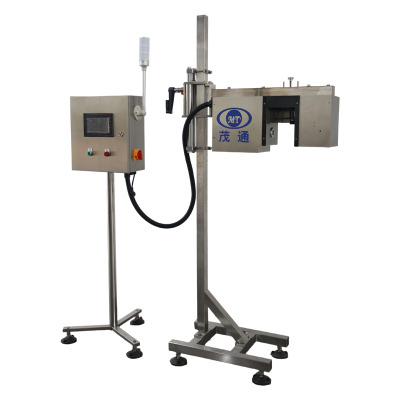
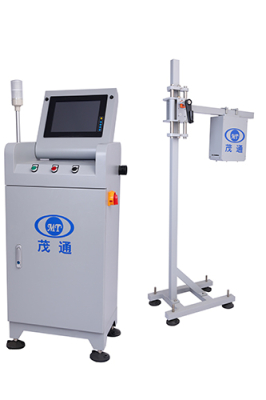
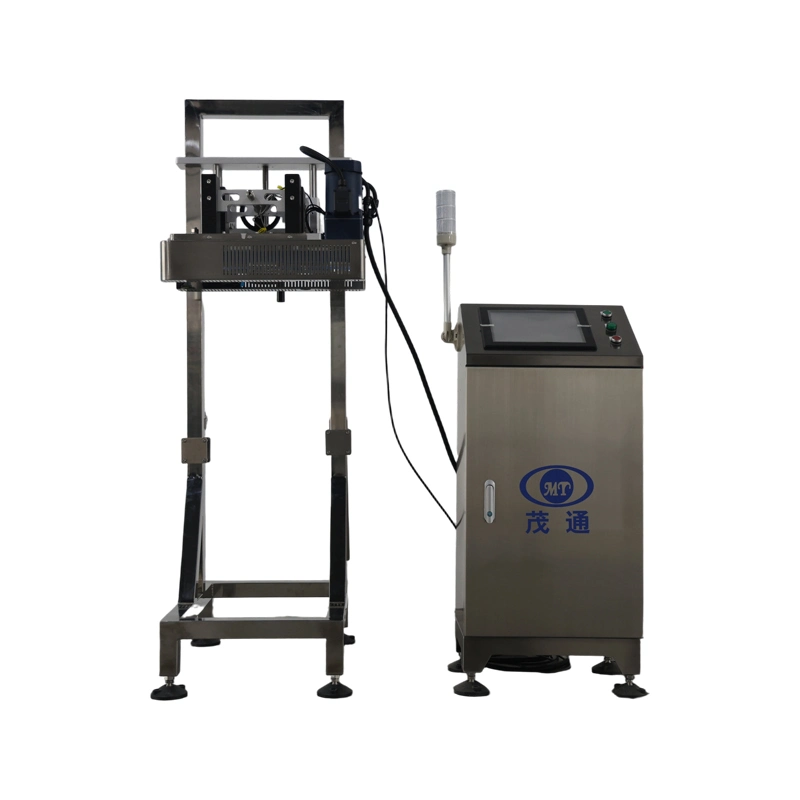
The Can Pressure Inspection Machine Can Pressure Inspection Machine has specific physical dimensions that are vital for effective conveyor planning:
| Item | Specification |
|---|---|
| Overall dimensions | 600 mm × 1000 mm × 1700 mm |
| Frame structure | 304 stainless steel, conveyor-mounted |
| Weight | Approximately 100 kg |
These figures help engineers estimate the machine's footprint, but they don't cover the entire installation requirement. The specific straight conveyor section needed, operator access, rejector movement space, cable routing, and air connection space must also be considered. A Can Pressure Inspection Machine performs best when seamlessly integrated into a stable mechanical section, not forced into a constricted or vibrating area.
How the Machine Measures Pressure Inline
The Can Pressure Inspection Machine employs a sophisticated belt-squeeze detection method. As a can or suitable container enters the inspection zone, a positioning sensor logs the product's identification information and encoder signal via the control unit. A force sensor then precisely measures the instantaneous pressure response as the product presses against the flexible belt. This technology ensures direct and highly accurate measurement of internal container pressure.
This pressure data is sent to the Maotong signal-processing board, where it's analyzed, and the results are then transmitted to both the HMI and the control unit. If the measured pressure falls outside the configured acceptable range, the control unit immediately activates the rejector to remove the faulty product. The specified detection range is 0.08–0.5 MPa, with a ±0.01 MPa static inspection accuracy and ±0.02 MPa dynamic inspection accuracy. Given that excessive vertical vibration of the conveyor chain can negatively impact accuracy, the structural stability around the Can Pressure Inspection Machine directly influences its overall inspection performance.
Detailed Working Principle
Schematic Diagram Explanation: A guide mechanism at the front pre-squeezes the cans to maintain consistent pressure. If a leak exists, the pressure is released as much as possible, and the remaining pressure at the tail end is measured. If there's no leakage, the pressure change is minimal. However, if a leak occurs, the pressure will deviate significantly from the normal reading, allowing for reliable detection of leaks and poorly sealed products.
Equipment Detection Principle: When a product passes, it triggers a positioning sensor that records its identification number and encoder signal via the control unit. The sensor then activates a force sensor to measure the instantaneous pressure exerted by the product against the belt. This data is transmitted to the Maotong signal processing board, which analyzes it and sends the results to the HMI for display and the control unit. Upon receiving a rejection signal, the control unit instructs the rejector to remove the defective product.
Conveyor Layout and Installation Requirements
Proper positioning begins with ensuring the clamping conveyor belt is perfectly aligned and parallel to the product’s bottom conveyor belt. The equipment should be installed horizontally to achieve this. This precise alignment allows the belt-squeeze method to generate more consistent pressure signals during high-speed operations, thereby ensuring measurement precision.
For optimal and reliable operation, the machine should be installed on a 1.5–2 meter straight conveyor section. It's also recommended that products are inspected after they have cooled sufficiently. The required utilities include single-phase AC 220V, 50Hz, 250W power and 4–8 bar compressed air that meets industry quality standards. Before powering up, all cables must be checked for secure connections, and the grounding wire of the control cabinet should be verified. These steps are essential practical safeguards for a conveyor-mounted Can Pressure Inspection Machine operating in continuous production environments.
Loading, Unloading, and Storage
During transportation, the equipment must be securely fastened and packaged. Special care should be taken to ensure the sensor is not subjected to external pressure or tension. The equipment exterior should be wrapped with moisture-proof and shock-resistant materials to prevent scratches, dents, and water damage. Securely fixing the machine to the transport vehicle prevents shifting or impact during movement. When unloading, use proper lifting and handling equipment, ensuring the machine is stably mounted to avoid slipping. For storage and use, maintain environmental conditions with relative humidity between 10% and 80%, and ambient temperature between 0°C and 50°C.
Safety Access Around the Frame
The 304 stainless steel frame and rejection mechanism need to remain accessible for safe operation and maintenance. All protective devices and warning labels should be in place before startup, and only trained personnel are permitted to operate the equipment. Maintenance and servicing must be carried out exclusively by qualified technicians.
Crucially, the machine must never be operated with its covers open. Before opening any cover, ensure both electrical power and compressed air supplies are switched off. Operators should keep their hands clear of the reject cylinder linkage and avoid blocking or accidentally touching the photoelectric trigger switch while the machine is running to prevent potential injury. Electrical connections must not be disconnected while the machine is powered on, as this could damage electrical components. During servicing, always use warning signage to prevent accidental startups. When connecting external devices, both the equipment and external units must be powered off first, and power should only be reconnected after all connections are secure. Finally, the frame and control cabinet must be reliably grounded because the electronic components within the machine are sensitive to static electricity.
Commercial Terms for Your Investment
•Delivery: To the buyer’s production site.
•Warranty: 12 months from acceptance (with a maximum of 14 months from shipment).
•Post-warranty service: For two years after warranty expiry, only engineer travel and spare parts costs will be charged.
•Routine inspections: Two visits per year (2 days each). Spare parts are chargeable; notify the supplier two weeks in advance.
•Software support: Lifetime free software upgrades without hardware modifications.
•Response time: Within 72 hours for on-site service dispatch in mainland China upon written request.
Why Structure Planning Truly Matters
The primary pitfall when specifying a Can Pressure Inspection Machine is focusing solely on the machine's dimensions. While the 600 mm × 1000 mm × 1700 mm body and approximately 100 kg weight are important, consistent and stable inspection ultimately depends on a suitable straight conveyor section, minimal vertical vibration, precise parallel belt alignment, reliable grounding, adequate air pressure, and sufficient clearance around the rejector. For buyers evaluating a Can Pressure Tester for high-speed can lines, considering these installation factors early in the process is essential. When the Can Pressure Inspection Machine is planned as an integrated system, accounting for the conveyor, utilities, and safety access, commissioning becomes much more predictable, and daily operation is significantly easier to manage.
FAQs
What are the Can Pressure Inspection Machine dimensions?
The machine measures 600 mm × 1000 mm × 1700 mm.
What is the frame made of?
The frame is constructed from 304 stainless steel and is designed for conveyor-mounted installation.
How much does the machine weigh?
The specified weight is approximately 100 kg.
How much straight conveyor space is recommended?
A 1.5–2 meter straight conveyor section is recommended, with products preferably inspected after cooling.
Can conveyor vibration affect pressure inspection?
Yes. Excessive vertical vibration of the conveyor chain can affect detection accuracy, so conveyor condition and alignment should be thoroughly checked during installation.
What utilities are required?
The machine requires single-phase AC 220V, 50Hz, 250W and 4–8 bar compressed air that meets industry quality standards.