Check Site Conditions Before Beer Level Inspection Starts
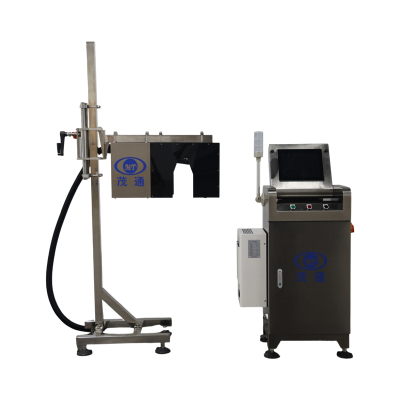
A Beer Level Detection Machine is designed for inline liquid level inspection after filling, helping beverage producers identify low-fill and high-fill containers before defective products continue downstream. On brewery and beverage lines, the real value of a beer level detection machine depends on more than the detection technology alone; conveyor layout, operating environment, rejection timing, and routine maintenance all have a direct impact on performance.

How the Detection Process Works
The beer level detection machine uses the X-ray penetration principle. When containers pass through the inspection area, different liquid levels form different projections at the receiving end. The system compares these signal values with standard parameters set by the user. If a container is judged to be outside the accepted fill level range, the rejection system removes it automatically.

This non-contact method is suitable for common packaging materials listed for the system, including aluminum, tinplate, PE, PET, PP, ceramics, and glass. The equipment supports both low liquid level detection as a standard function and high liquid level detection as an auxiliary function, making it relevant for beverage producers that need consistent fill control across multiple container types.
Key Technical Requirements to Review
Before selecting a beer level detection machine, buyers should compare the machine’s operating range with the actual production line. The MT-HFX-06 liquid level detection system is specified for online inspection and rejection of non-conforming containers, with high-performance configurations reaching up to 72,000 bottles or cans per hour.
| Requirement | Specification |
|---|---|
| Conveyor speed | ≤1.6 m/s |
| Container volume | 200–2000 ml |
| Container diameter | 30–90 mm in product range; 20–120 mm by model selection |
| Container height | 50–200 mm |
| Dynamic resolution | ±1.5 mm, affected by foam or liquid turbulence |
| Static resolution | ±1 mm |
| Rejection accuracy | ≥99.99% at 400 containers/minute |
| Power supply | 220V, 50Hz, single-phase |
| Control voltage | 24 VDC |
| Total power consumption | Approx. 1.0 kW |
A beer level detection machine also requires compressed air for the rejection device. The customer provides the connection pipeline from the air source to the main equipment unit, so this point should be checked during site preparation rather than after installation begins.
Environmental Conditions That Affect Stability
A beer level detection machine should operate within the stated site conditions: 5–3000 meters above sea level, 5°C–40°C ambient temperature, and 50%–65% RH relative humidity. Keeping the line within these ranges supports stable signal processing and helps avoid interference from unsuitable operating conditions.
Factory conditions also matter. The production site should meet relevant national standards for floor levelness, load-bearing capacity, and related infrastructure requirements. In practical terms, the inspection unit, rejection unit, power distribution cabinet, HMI, electronic assemblies, and mechanical parts all need a stable foundation to maintain consistent alignment during continuous operation.
Installation Position on the Production Line
The beer level detection machine is normally installed downstream of the filling machine and may be placed before or after the inkjet printer. This position allows the system to inspect filled containers early enough for corrective action while still fitting naturally into a high-speed beverage packaging line.
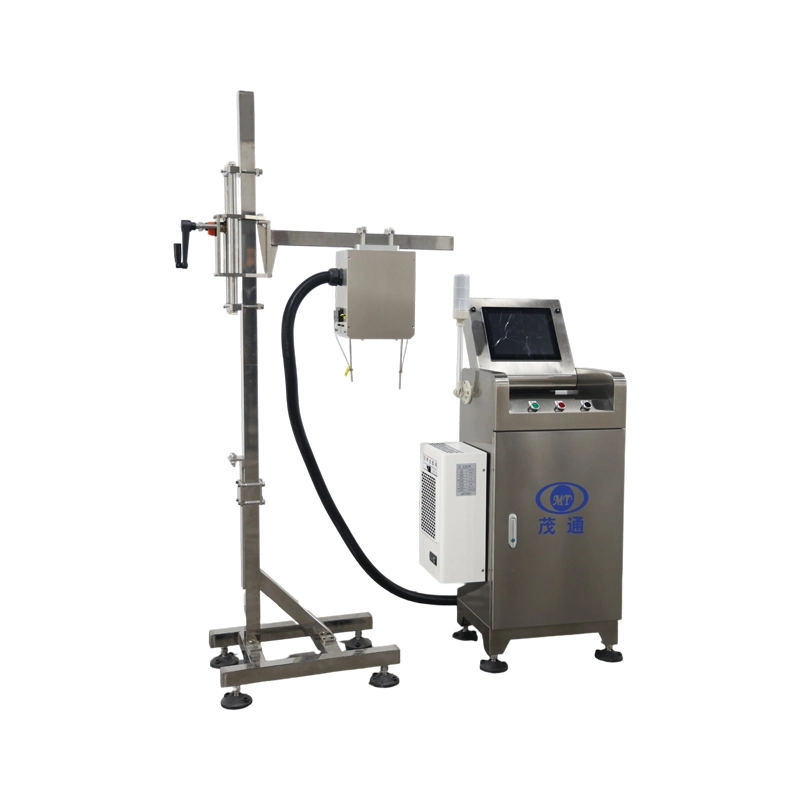
For installation, the line should provide a single-row conveyor chain with at least 2 meters of straight section at the installation site. A guardrail gap of ≤15 cm should be opened in the straight conveyor section so the rejector can discharge defective containers. A rigid collection box is recommended at the rejection point to receive removed products safely and keep the surrounding area organized.
Encoder Counting and Rejection Accuracy
One important feature of the beer level detection machine is encoder-based counting. The encoder is installed on the synchronous motor of the conveyor chain where defective containers are tracked. This setup helps maintain rejection accuracy even when the production line stops or changes speed.
For breweries and beverage manufacturers, this matters because fill-level inspection and rejection are only useful when the correct container is removed. The machine’s automatic speed adaptation supports dynamic inspection on different production line speeds, while separate inspection and control cabinets help reduce electromagnetic interference between electronic components.
Storage and Maintenance Before Long-Term Operation
After delivery, the beer level detection machine and its components should be stored in facilities that meet relevant standards. During storage, lubrication and maintenance should be performed to prevent surface damage or deformation that could affect later installation, commissioning, or normal operation.
Routine maintenance should focus on mechanical stability, lubrication, humidity protection for electronic components, and periodic checks of detection performance. The system uses stainless steel housing and a sealed mainframe design that is resistant to fog and water droplets, but stable operating habits still play an important role in preserving long-term inspection accuracy.
Practical Buyer Checklist
Before commissioning a beer level detection machine, confirm these points on site:
•The conveyor is single-row and includes at least 2 meters of straight section.
•The installation point is downstream of the filler and aligned with the inkjet process plan.
•The guardrail opening for rejected containers does not exceed 15 cm.
•Power supply, control voltage, and compressed air connection are prepared.
•Temperature, humidity, and altitude remain within the stated operating range.
•A rigid collection container is ready at the rejection point.
•Storage and lubrication measures have been followed before installation.
When these requirements are addressed early, the beer level detection machine can integrate more smoothly into the production line and support consistent fill level control with fewer avoidable commissioning issues.
FAQs
Where is a beer level detection machine usually installed?
It is typically installed after the filling machine, either before or after the inkjet printer, on a single-row conveyor chain.
What straight conveyor length is required?
A straight section of at least 2 meters should be reserved at the installation site to support stable detection and rejection.
What environmental range should be maintained?
The specified operating range is 5–3000 meters altitude, 5°C–40°C temperature, and 50%–65% RH relative humidity.
What container materials can the system inspect?
The system is suitable for aluminum, tinplate, PE, PET, PP, ceramics, glass, and other common packaging materials listed for the liquid level detection system.
Does the system detect both low and high fill levels?
Yes. Low liquid level detection is the standard function, while high liquid level detection is provided as an auxiliary function.