How Pull Ring Cover Inspection Finds Cap Defects Fast
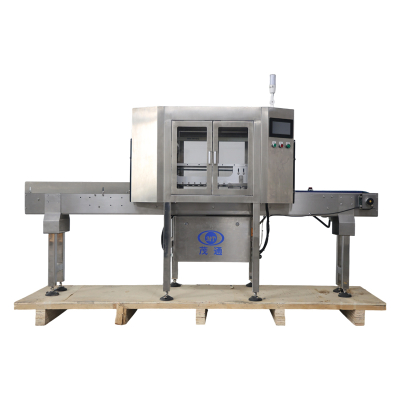
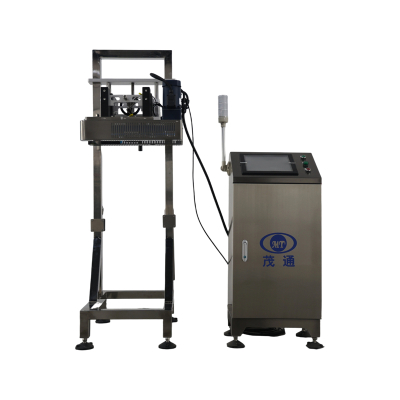
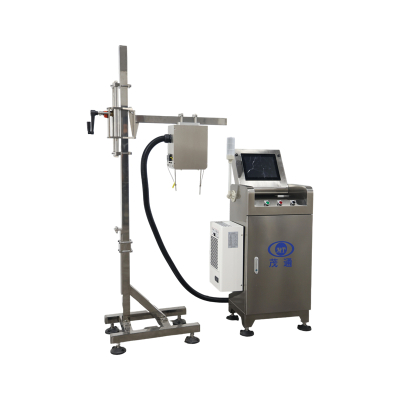
On a high-speed can line, cap inspection has to be fast, repeatable, and precise enough to remove the right can without slowing production. The Pull Ring Cover Inspection Machine, model Pull Ring Cover Inspection Machine, is engineered for non-contact online inspection of can caps. It rigorously checks for cap presence, cap pop-up, and cap angle deviation, all while supporting production speeds up to 60,000 cans per hour with 360° online inspection coverage and an IP65 protection rating. This ensures robust quality control in demanding environments.

Why Cap Inspection Needs More Than Presence Checking
A cap might be present but still fall short of quality requirements, posing a significant risk to product integrity and brand reputation. On easy-open can lines, common concerns include a missing cap, a cap angle outside the permitted range, or a cap surface that pops up due to can expansion or air leakage. These defects can lead to product spoilage, consumer dissatisfaction, or even costly recalls. The advanced Pull Ring Cover Inspection Machine addresses these critical conditions as part of one continuous online process, helping production teams identify and reject defective caps before they move further downstream in the packaging process.
Customized light sources are essential to reduce interference from cover and pull-ring colors. This is crucial because varying cap surfaces, shiny pull rings, reflections, and the constant motion of the line can all affect image stability and inspection accuracy. The Pull Ring Cover Inspection Machine is specifically designed for non-contact inspection, ensuring the can remains completely undamaged throughout the quality-control process.
Cap Pop-Up Detection Principle
For effective cap pop-up detection, the system employs curved-surface scanning technology to continuously monitor the upper surface of each can cap. This method is highly sensitive, detecting even subtle changes in the cap's contour. When poor sealing or abnormal internal pressure causes a sudden, minute deformation in the cap surface, the system instantly identifies this condition as a defective seal. This early detection prevents compromised products from reaching the market.
The specified defect condition for cap pop-up is a deviation of ≥1 mm. Under standard operating conditions, the Pull Ring Cover Inspection Machine delivers a rejection rate of ≥99.9% for this item, alongside an impressively low false detection rate of ≤0.03%. It's worth noting that actual performance may be fine-tuned based on specific product cap conditions and the degree of production-line jitter, ensuring optimal accuracy for various production setups.
Cap Angle Detection Principle
Cap angle detection relies on a high-resolution Gigabit Ethernet digital camera that captures crisp, top-down images of can caps as they arrive at the inspection point. These images are then swiftly transmitted to an advanced image processor, where they undergo rigorous analysis using 360° template matching algorithms. This sophisticated technique allows the system to accurately compare each cap's angle against predefined quality templates. If the cap angle deviation reaches the specified rejectable condition, the can is immediately flagged and automatically removed from the production line.
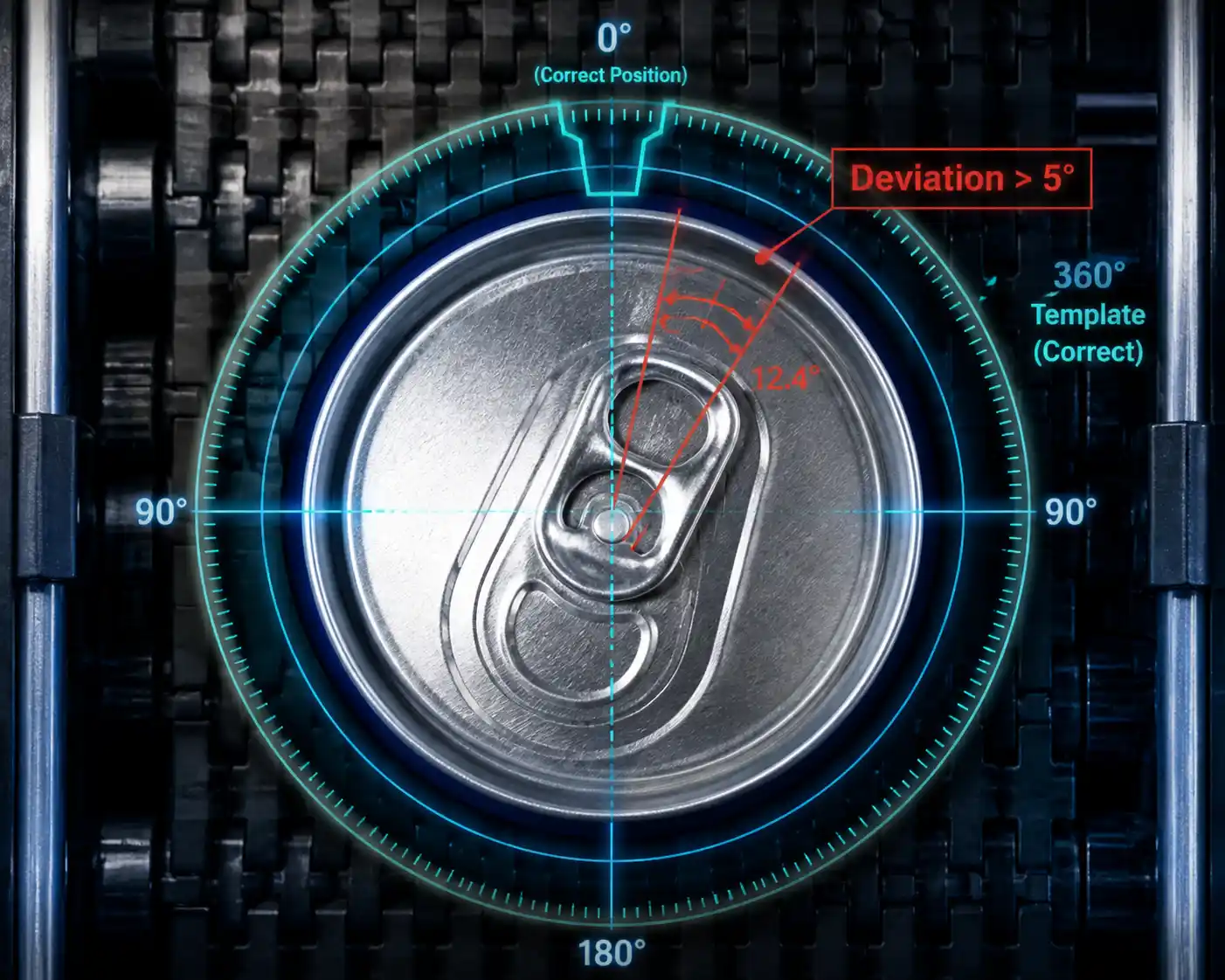
For this crucial inspection item, a cap angle deviation of ≥5° is classified as defective, while deviations below this threshold are tolerated to maintain efficient production. The standard rejection rate for this Pull Ring Cover Inspection Machine is ≥99.9%, with a false detection rate of ≤0.03%. For those with broader 360° cap inspection requirements, our 360° Pull Ring Inspection Machine also offers comprehensive solutions.
From Triggering to Rejection: The Seamless Workflow
The Pull Ring Cover Inspection Machine effectively links every inspection result to the specific physical can that generated it, ensuring traceability and accuracy. The workflow is meticulously designed for high-speed efficiency: when a can reaches the designated inspection area, a precise positioning sensor detects its arrival. The control unit then records the unique can ID and the current encoder value, which synchronizes the inspection process. The sensor triggers the digital camera to capture a high-fidelity image of the cap.
The captured image data is rapidly processed and analyzed by the image processor. The results are simultaneously sent to the Human-Machine Interface (HMI) for real-time dynamic display and to the control unit for immediate rejection control. If a defective cap is identified, the control unit instantly instructs the rejector mechanism to remove the corresponding can from the online production stream. This synchronized sensor-to-rejector sequence is absolutely vital for maintaining consistent accuracy and high throughput as the conveyor continues its rapid movement.
Detection Items and Standard Accuracy
The Pull Ring Cover Inspection Machine is engineered to deliver exceptional accuracy across critical inspection parameters:
| Inspection Item | Specified Defect Condition | Standard Rejection Rate | False Detection Rate |
|---|---|---|---|
| No cap | Cap absent | ≥99.99% | ≤0.03% |
| Cap angle offset | Deviation ≥5° | ≥99.9% | ≤0.03% |
| Cap pop-up | Deviation ≥1 mm | ≥99.9% | ≤0.03% |
These values represent the standard performance figures for the Pull Ring Cover Inspection Machine. In practical operation, factors like the specific cap surface condition and any inherent conveyor jitter are carefully considered during the initial setup and ongoing adjustments, ensuring the system consistently performs at its peak.
Installation and Operation Notes
The recommended installation position for the Pull Ring Cover Inspection Machine is a 1.5–2 meter straight conveyor section directly downstream of the sealing machine. This strategic location ensures that inspection occurs immediately after the critical sealing process, while providing the equipment with the ideal straight-line section it requires for optimal performance and accurate image capture.
For seamless day-to-day production management, this inspection machine offers comprehensive operational features. It can automatically store daily images of defective caps, with an adjustable retention period that allows for detailed analysis and quality review. Further, it supports continuous rejection of faulty items and features an automatic line stopping function once the defect count reaches a preset limit, preventing further production of non-conforming products. A user-friendly HMI with multi-level access controls supports efficient operator oversight, while an industrial-grade cooling system helps maintain stable operation even during prolonged use in warmer conditions. For added peace of mind, remote monitoring and service are available around the clock, ensuring minimal downtime and prompt technical support.
FAQs
What is the maximum inspection speed of the Pull Ring Cover Inspection Machine?
The Pull Ring Cover Inspection Machine is designed to handle high-volume production, supporting speeds of up to 60,000 cans per hour.
What cap pop-up deviation is considered defective by the machine?
A cap pop-up deviation of ≥1 mm is specified as a defective condition, triggering an automatic rejection by the system.
How does the Pull Ring Cover Inspection Machine detect cap angle defects?
It utilizes a Gigabit Ethernet digital camera to capture top-down cap images, which are then analyzed using 360° template matching. A deviation of ≥5° is identified as rejectable.
What are the recommended installation requirements for the machine?
Installation is recommended on a 1.5–2 meter straight conveyor section located directly downstream of the sealing machine.
Does the inspection process involve physical contact with the can?
No. The Pull Ring Cover Inspection Machine performs non-contact online inspection, ensuring the product remains completely undamaged throughout the quality control process.