Track Every Pull Ring Cover Before It Ships
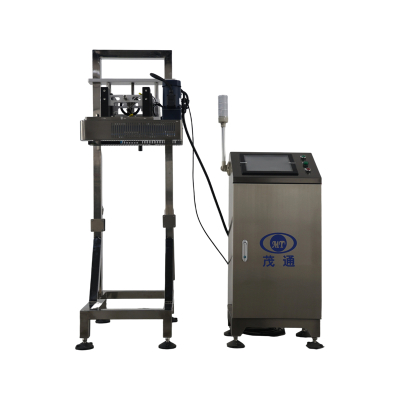
On a high-speed canned beverage line, reliable cap quality control demands that inspection, tracking, and rejection operate as a unified process. Our Pull Ring Cover Inspection Machine Pull Ring Cover Inspection Machine is specifically engineered for online can-cap inspection, capable of speeds up to 60,000 cans per hour. It seamlessly integrates non-contact inspection, comprehensive 360° coverage, advanced image processing, intuitive HMI display, and precise automatic rejection.

Why Cap Tracking is Crucial on High-Speed Can Lines
For beverage manufacturers, merely detecting a defect isn't enough. The inspection system must also guarantee that the identified defective can is indeed the one removed from the conveyor. This is precisely where synchronized positioning becomes crucial to the Pull Ring Cover Inspection Machine's workflow, ensuring real-time accuracy and minimizing errors. We engineered this system to perform real-time, non-contact inspections that prevent any damage to your product.
As a can moves past the positioning sensor, its arrival is registered, and the control unit logs its unique ID and encoder value. This sensor then triggers a high-resolution Gigabit Ethernet digital camera to capture a clear image of the cap. The advanced image processor analyzes this data, sending the inspection result concurrently to the HMI for live display and to the control unit for the final rejection decision. If the cap is found to be non-conforming, the control system instantly signals the rejector to remove that specific can in real time.
Can Arrival → Positioning Sensor → ID & Encoder Value
                         ↓
                Gigabit Ethernet Camera
                         ↓
                  Image Processor
                 ↙              ↘
              HMI Display     Control Unit
                                  ↓
                              Rejector
This robust architecture enables our Pull Ring Cover Inspection Machine to provide continuous online inspection, moving beyond the limitations of traditional manual sampling post-production. It also features a user-friendly HMI with multi-level access controls for enhanced security and ease of operation.
Defects Our Pull Ring Cover Inspection Machine Identifies
Our Pull Ring Cover Inspection Machine is designed to address specific cap-related defects that directly impact can aesthetics, closure integrity, and subsequent quality control processes. Its comprehensive inspection scope includes cap presence verification, precise cap angle deviation detection, and identification of lid pop-up or bulging.

| Inspection Item | Detection Condition | Standard Rejection Rate | False Detection Rate |
|---|---|---|---|
| No Cap | Cap missing | ≥99.99% | ≤0.03% |
| Cap Angle Offset | Deviation angle ≥5° | ≥99.9% | ≤0.03% |
| Lid Pop-up or Bulging | Deviation value ≥1 mm | ≥99.9% | ≤0.03% |
For angle detection, our system captures top-down images of the caps, which are then processed and compared through advanced 360° template matching algorithms. For lid pop-up inspection, specialized curved-surface scanning technology continuously monitors the cap's top surface, identifying abrupt changes that are indicative of bulging, can expansion, or internal air leakage. These accuracy values represent our standard figures; actual performance may be fine-tuned based on the specific cap conditions and the degree of jitter present on your production line.
The machine is therefore suitable for manufacturers that need practical, repeatable defect criteria instead of relying on occasional manual checks. By combining image acquisition with process synchronization, the system supports more stable online quality control under demanding line speeds.
Installation Conditions Buyers Should Consider
The recommended installation position for our system is a 1.5–2 meter straight conveyor section immediately downstream of the sealing machine. This specific detail is vital, as conveyor stability directly affects the synchronized operation of the camera, positioning sensor, encoder signal, and rejector at high speeds. We equip the machine with an industrial-grade cooling system to ensure stable performance, even during prolonged operation in warmer conditions.
Before installing a Pull Ring Cover Inspection Machine, buyers should carefully review their actual can type, cap condition, conveyor straightness, rejector location, desired operating speed, ambient lighting, and HMI requirements. Our system utilizes specialized, customized light sources to significantly reduce interference from various cap and pull-ring colors, ensuring consistent inspection accuracy.
Practical Features for Enhanced Production Management
Beyond its core defect detection capabilities, the Pull Ring Cover Inspection Machine Pull Ring Cover Inspection Machine integrates practical functions designed to streamline daily line management. Its HMI offers multi-level access, while features such as automatic storage of defective-cap images with adjustable retention, 24/7 remote monitoring and control, continuous rejection, and automated line stopping after a set number of defects enhance operational control and minimize downtime. This includes continuous rejection and line stop functions, ensuring production halts automatically when defect counts exceed predefined limits.
The machine boasts an IP65 safety protection rating, making it widely applicable in canned beverage production lines for comprehensive cap inspection and automatic rejection of defective cans. The non-contact inspection method prevents physical damage to products, simultaneously empowering manufacturers to cut labor costs and achieve greater consistency in cap quality assessments. This not only enhances production efficiency but also ensures that inspection results consistently meet relevant manufacturer technical standards for beverage packaging.
When This Machine Fits Your Production Line
Our Pull Ring Cover Inspection Machine proves particularly valuable for canning lines requiring rapid, consistent cap inspection immediately following the sealing process. For the Pull Ring Cover Inspection Machine, the true advantage lies in its seamless integration of image capture with precise product tracking: every inspected can is linked to its unique sensor record and encoder value, allowing the control unit and rejector to address defects with pinpoint accuracy. This 360° cap inspection capability significantly minimizes false rejections that might otherwise be caused by friction or misalignment during movement.
When evaluating the system, buyers should consider more than just maximum speed. A more robust approach involves confirming that the line layout, conveyor stability, cap type, defect thresholds, and rejection points are all harmonized with the inspection workflow. When these critical conditions are aligned, the Pull Ring Cover Inspection Machine offers a robust solution for ensuring online cap quality control on demanding, high-speed can lines. We offer customizable functions that can be tailored to meet your specific and unique production requirements.
For product details, configuration discussion, or installation planning, we invite you to visit our Pull Ring Cover Inspection Machine product page or contact Jinan Maotong Inspection Equipment Co., Ltd. at +86 18612569280 or qibin@maotongtech.com.
FAQs
What specific defects does the Pull Ring Cover Inspection Machine identify?
It identifies missing caps, cap angle deviation of ≥5°, and lid pop-up or bulging deviation of ≥1 mm.
What is the maximum production speed of our Pull Ring Cover Inspection Machine machine?
The Pull Ring Cover Inspection Machine is designed to support production speeds of up to 60,000 cans per hour.
What are the recommended installation requirements for the machine?
A 1.5–2 meter straight conveyor section should be reserved immediately after the sealing machine for optimal placement.
Does the system offer storage for images of defective caps?
Yes, the machine features automatic storage of defective-cap images, with an adjustable retention period for analysis and quality review.
Are the stated rejection rates guaranteed under all operating conditions?
The listed rejection rates are standard values. Actual results may require adjustments based on specific cap conditions and the degree of jitter present on your production line.