Keep Craft Beer Canning Lines Stable Before Leaks Escape
In craft beer canning, even a small sealing problem can turn into a visible quality issue once cans have already moved downstream. Our Craft Beer Can Leak Detection Machine is designed for online sealing inspection, helping production teams identify defective products and remove them from the line without direct contact with the container. When buyers evaluate can inspection equipment, they usually look not only at the inspection technology itself, but also at whether the conveyor, spacing, and installation environment allow the system to work consistently.

Why sealing inspection matters in craft beer canning
Our Craft Beer Can Leak Detection Machine focuses on sealing quality checks for craft beer cans. The system performs non-contact online inspection, so the product is not damaged during detection. It is designed to support fast inspection, with product information indicating speeds of up to 72,000 cans per hour at the fastest. This makes it suitable for continuous canning lines where manual inspection or occasional sampling may not provide enough coverage for every container.
The system also supports 360° online bottle cap inspection, a useful function when the sealing area must be checked from all around the container. In practical production, timely detection of sealing machine faults helps prevent large quantities of defective cans from continuing through the line.
How the Craft Beer Can Leak Detection Machine inspects the seal
The inspection principle is based on a high-resolution camera and a 360-degree sidewall lens. As the container passes through the inspection area, the system photographs the sidewall area related to sealing inspection. It first locates the cap position accurately, then creates a circular detection region along the sidewall edge within the image.

If the seal is poor, a noticeable grayscale value change appears in that circular inspection area. The system evaluates the degree of grayscale change against a threshold parameter. When the grayscale value exceeds the threshold, the product is identified as defective and automatically rejected. This process allows the Craft Beer Can Leak Detection Machine to inspect continuously while avoiding contact with the product.
For production teams already using other forms of cap inspection, this 360° sealing inspection approach adds a focused check around the sealing zone where leakage risks often begin.
Core configuration and operating conditions
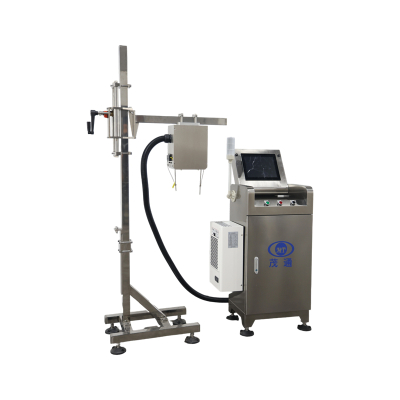
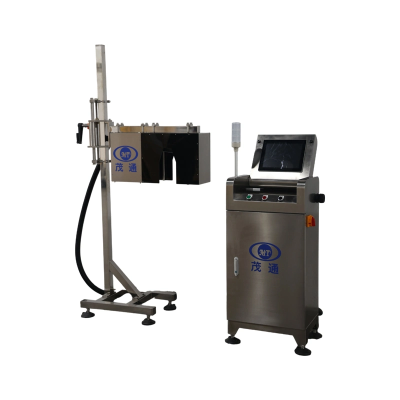
A typical Craft Beer Can Leak Detection Machine combines image acquisition, processing, lighting, and rejection control in one coordinated inspection system. The equipment composition includes an image processing industrial computer, a customizable full-view camera, a camera IO module, a customizable all-around lens, camera cable, DSP unit, touchscreen, light source controller, and light source.
| Item | Specification or component |
|---|---|
| Project title | Sealing Inspection System |
| Function | Checks sealing quality, detects defective products, and removes them from the line |
| Applicable container size | 1L–2L |
| Power supply | 220V, 50Hz, single-phase |
| Control voltage | 24 VDC |
| Total power consumption | Approximately 0.5 kW |
| Compressed air | 4–12 bar |
| Main imaging method | High-resolution camera with 360-degree sidewall lens |
Environmental conditions also matter. The equipment is specified for an altitude range of 5–3000 m, an operating temperature of 5°C–40°C, and relative humidity of 50%–65% RH. The factory floor should meet appropriate flatness and load-bearing requirements to support stable installation and operation.
Installation details that affect inspection accuracy
The Craft Beer Can Leak Detection Machine depends heavily on stable conveying. The production line should be equipped with a single-row chain conveyor and a straight section of at least 1.8 meters. This straight section gives the inspection system a more controlled area for image capture and helps reduce unstable positioning before the camera reads the sealing region.
The conveyor must also maintain a clear passage around the bottle neck area. Vibration and water droplets should be avoided in the inspection zone because both can interfere with camera-based inspection. Even a capable imaging system can produce unstable results if the container shakes or if droplets distort the image.
Conveyor angle, spacing, and clamping control
The inspection conveyor should have an inclination of no more than 20°. Cans should maintain 3–5 mm spacing during conveying. This spacing helps the vision system separate one container from the next and reduces the chance of image overlap or irregular positioning.
If noticeable vibration appears at the bottle neck area during inspection, a 60–80 mm clamping device should be installed. The purpose is simple: stabilize the container at the inspection point so the image remains clear and repeatable. For buyers planning a retrofit, these installation details should be checked before placing the Craft Beer Can Leak Detection Machine into a high-speed line.
Practical buying considerations
Before purchasing a Craft Beer Can Leak Detection Machine, buyers should confirm the conveyor type, available straight-line space, container spacing, air supply, voltage, operating environment, and rejection layout. The inspection system is most effective when the mechanical line conditions support stable imaging. Put simply, the machine and the conveyor should be planned as one inspection station, not as separate pieces of equipment.
A well-installed Craft Beer Can Leak Detection Machine supports non-contact online monitoring, 360° sealing area inspection, and automatic removal of defective products. For craft beer canning operations, that means fewer defective cans reaching downstream processes and better control over sealing-related quality risks. If you would like support matching our system to your existing conveyor or layout, contact our team for a detailed evaluation.
FAQs
What does a Craft Beer Can Leak Detection Machine inspect?
It checks sealing quality on craft beer cans, detects defective products, and removes non-conforming cans from the production line.
Does the inspection process touch the can?
No. The system uses non-contact online inspection, so the product is not damaged during detection.
What conveyor layout is required?
The line should use a single-row chain conveyor with a straight section of at least 1.8 meters.
What spacing should be maintained between cans?
Cans should maintain 3–5 mm spacing during inspection to support stable image recognition.
When is a clamping device needed?
If vibration is visible at the bottle neck inspection point, a 60–80 mm clamping device should be added to improve stability.
What power and air supply are required?
The system uses 220V, 50Hz power, 24 VDC control voltage, approximately 0.5 kW total power, and 4–12 bar compressed air.