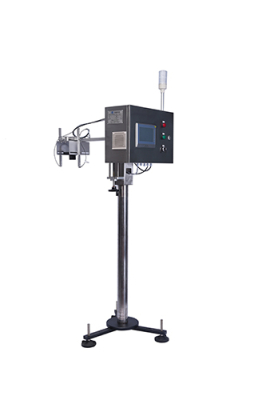
Craft Beer Can Leak Detection Machine Protects Packaging Lines
In craft beer packaging, a small sealing defect can create a large quality problem. Loss of internal pressure, slow leakage, and unstable product presentation can affect shelf life, distribution safety, and customer confidence. At Maotong Inspection, our Craft Beer Can Leak Detection Machine is designed to inspect sealing quality online, identify defective cans, and trigger automatic rejection before unqualified products continue down the line.

Why Sealing Inspection Matters for Craft Beer Cans
Craft beer cans rely on consistent sealing to maintain packaging integrity throughout filling, handling, storage, and transportation. A can may look acceptable from the outside while still having a weak sealing area. For breweries, this makes inline inspection more practical than relying only on periodic manual checks.
The Craft Beer Can Leak Detection Machine supports non-contact online inspection, which means cans are inspected without physical damage during production. Its inspection speed can reach up to 72,000 cans per hour, making it suitable for high-throughput lines where quality control must keep pace with production.
How the Craft Beer Can Leak Detection Machine Inspects Seals
The inspection principle is based on machine vision. A high-resolution camera works with a 360-degree sidewall lens to photograph the sealing area around the can cap. This full-view imaging approach helps the system inspect the sealing edge around the container rather than relying on a narrow single-angle view.
After image capture, the system locates the cap and establishes a circular detection area at the sidewall edge in the image. If the cap is poorly sealed, the circular area shows a noticeable change in grayscale value.

The system then compares this grayscale variation with a preset threshold. If the grayscale value exceeds the threshold, the product is judged defective and the rejection device removes it from the production line.
This process gives the Craft Beer Can Leak Detection Machine a clear decision path: locate the cap, define the inspection region, analyze grayscale change, compare the threshold, and reject the unqualified can.
Main System Components
Our Craft Beer Can Leak Detection Machine uses a modular structure that combines image capture, processing, control, and rejection. The mechanical section includes three core parts:
| Component | Role in the System |
|---|---|
| Distribution cabinet | Supplies power, processes images, and controls defective product rejection |
| Detection module | Dynamically captures inspection images during production |
| Rejection device | Receives rejection signals and removes defective products |
The electrical configuration includes an image processing industrial computer, customizable full-view camera, camera IO module, customizable all-around lens, camera cable, MT-9000 DSP, touchscreen, OPT light source controller, and LISHI light source. Together, these components support stable image acquisition, signal processing, and operator control through a touchscreen HMI.
Production and Installation Requirements
Stable installation conditions are essential for accurate visual inspection. The production line should use a single-row chain conveyor with at least 1.8 meters of straight section. The conveyor should maintain a clear passage around the bottle neck area and avoid vibration or water droplets near the inspection point.
For best inspection stability, the conveyor inclination should not exceed 20°, and cans should maintain 3–5 mm spacing. If vibration is visible at the inspection installation location, a 60–80 mm clamping device should be added to stabilize the containers. These conditions help the Craft Beer Can Leak Detection Machine capture consistent images and reduce interference during inspection.
The machine is designed for operating environments with an altitude range of 5–3000 m, an operating temperature of 5°C–40°C, and relative humidity of 50%–65% RH. Production utilities include 220V, 50Hz, single-phase power, approximately 0.5 kW total power consumption, 24 VDC control voltage, and 4–12 bar compressed air supply.
Practical Value for Breweries
For breweries, the key value of the Craft Beer Can Leak Detection Machine is not only finding defective cans. It also helps identify sealing machine faults in time, reducing the risk of producing large quantities of defective products. Automated rejection supports more consistent quality control compared with manual inspection alone.
The system is suitable for 1L–2L containers and supports continuous online monitoring. For lines that also require other packaging checks, related equipment such as a Cap and Liquid Level Inspection Machine or a Bag Product Leakage Inspection Machine may be evaluated according to packaging format and inspection needs.
Choosing the Right Line Setup
A Craft Beer Can Leak Detection Machine performs best when the line layout is planned around stable conveying, clean inspection conditions, and consistent spacing. Buyers should review conveyor structure, available straight-line space, vibration points, air supply, electrical requirements, and reject device positioning before installation.
For project consultation, you may contact our team through WhatsApp, telephone at +8618612569280, or email at qibin@maotongtech.com.
FAQs
What does the Craft Beer Can Leak Detection Machine detect?
It detects sealing defects by analyzing grayscale changes around the cap edge within a circular detection area.
Is the inspection contact-free?
Yes. The machine uses non-contact online inspection, so the product is not damaged during detection.
How are defective cans removed?
When the grayscale value exceeds the preset threshold, the system sends a signal to the rejection device, which removes the defective can.
What conveyor conditions are required?
A single-row chain conveyor with at least 1.8 meters of straight section is required. The line should avoid vibration and water droplets near the inspection area.
What production speed can it support?
The machine can inspect up to 72,000 cans per hour under suitable line conditions.