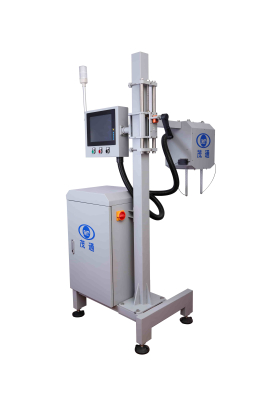
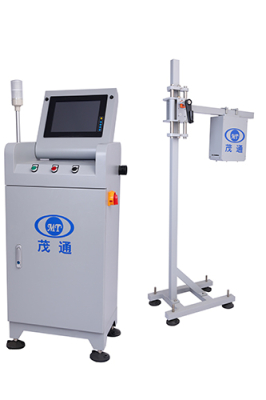
Research on Foreign Object Detection Technology for Cans After Filling and Before Sealing
In the food and beverage industry, a small piece of transparent film, a metal fragment, or a glass shard can pose a significant threat to product quality. Foreign object detection after filling and before sealing cans is a critical line of defense in ensuring food safety.
In the can production process, the stage after filling and before sealing is a high-risk point for foreign object contamination. Due to the opaque nature of the can and the highly reflective inner surface, traditional detection methods struggle to effectively identify foreign objects, especially transparent or tiny contaminants.
Through the combination of advanced technologies such as polarized light illumination, X-ray transmission, and machine vision, modern detection systems can now detect various foreign objects in real-time on high-speed production lines, including traditional metal and glass fragments, as well as difficult-to-identify transparent film fragments.
1. Technical Challenges of Foreign Object Detection
Foreign object detection in cans faces multiple technical challenges. The opaque nature of the can precludes simple transmission inspection, while its highly reflective and structured inner surface causes multiple reflections of light, leading to rapid loss of polarization direction and interfering with imaging results.
The varying characteristics of the foreign objects themselves also increase the difficulty of detection. For example, transparent film fragments that may be mixed in during the packaging process have varying polarization characteristics: some are strongly polarized, some weakly polarized, and some not polarized at all. For weakly polarized or non-polarized films, traditional polarization detection methods have limited effectiveness.
The actual conditions of the production environment also present challenges. High-speed production lines require the detection system to complete the judgment in a very short time—typically more than 10 cans per second. At the same time, mechanical vibrations on the production line and changes in ambient light can interfere with detection accuracy.
2. Principles and Methods of Mainstream Detection Technologies
Polarized Light Imaging Technology
To address the detection difficulties caused by the reflective inner surface of the can, polarized light imaging technology offers an innovative solution. This technology incorporates a first polarization device in the light path between the light source of the illumination device and the inner bottom wall, polarizing the radiation reaching the inner bottom wall.
The illumination device is designed so that the main part of the radiation directed into the container reaches the inner bottom wall directly, rather than the side walls. This ensures that the light reflects only once from the inner bottom wall before returning to the image recording device, maintaining its polarization direction. When using circularly polarized light, the direction of rotation of the light changes after reflection from the inner bottom wall, allowing for effective identification of foreign objects through the use of appropriate polarizing filters.
Studies have shown that optimal detection results are achieved when the illumination and image recording devices are positioned between 500mm and 700mm from the can opening, and the illumination and image capture are performed at an angle of less than 10°. This configuration significantly improves the detection rate of weakly polarized and non-polarized foreign objects.
Machine Vision and Dark-Field Imaging
Machine vision technology is widely used in the detection of foreign objects in beverage cans, especially suitable for detecting defects in the can opening, bottom, and inner wall areas. A complete detection system typically includes an illumination system, an image acquisition system, and an image processing system.
Dark-field imaging is a special technique that illuminates the container from the side, making foreign objects appear brightly against a dark background. For filled containers, a vibration device is used to vibrate the side wall of the container, causing foreign objects at the bottom to move, making them easier to identify in the image.
In practical applications, the system uses the maximum inter-class variance method to separate the target area and perform contour feature analysis on the can opening area; the Hough gradient method is used to segment the concentric circular area of the can bottom; and polar coordinate transformation is used to solve the image compression problem for the inner wall area, followed by binarization and connected component analysis to locate defects.
X-ray Transmission Detection Technology
X-ray detection technology has good detection capabilities for foreign objects of different materials, and is especially suitable for non-transparent packaging. The system consists of a radiation source and a detector. By capturing the transmission image generated by X-ray transmission imaging, it can identify whether the can is missing necessary components or contains foreign objects such as metal impurities.
A major advantage of X-ray detection is its ability to perform multiple detections simultaneously: including foreign object detection, packaging integrity verification, and content confirmation. New X-ray systems such as the ScanTrac 200 can detect foreign objects as small as 0.5mm at a speed of up to 2200 pieces per minute.
Vibration Excitation and Multi-Image Comparison
For filled beverage cans, an effective method is to use vibration to move potential foreign objects, making them easier to detect. This system uses a vibration device to act on the side wall of the container, causing foreign objects at the bottom to move, and then the inspection camera captures a dark-field image of the bottom of the container. The key technology lies in configuring multiple inspection cameras sequentially along the conveying direction, with their imaging areas overlapping. This allows for the acquisition of a continuous sequence of images of the container bottom. By comparing the differences in these images, moving foreign particles can be accurately identified.
3. Key Technological Components of the Detection System
A complete beverage can foreign object detection system comprises several precisely coordinated components. The lighting system is essential for ensuring stable imaging; different types of light sources (such as LED spotlight sources) and lighting methods (bright field, dark field) can be selected according to detection requirements.
The image acquisition system consists of industrial cameras, lenses, and image sensors, responsible for obtaining high-quality images of the inside of the can. Modern systems typically use high-resolution CCD or CMOS cameras, coupled with specific polarizing filters, to capture clear images of the can interior.
The image processing system uses various algorithms to analyze the acquired images, including image preprocessing (smoothing, filtering, noise reduction), feature extraction, and defect identification. Advanced systems also employ artificial intelligence technologies, such as convolutional neural networks (CNN), to improve detection accuracy and adaptability.
The positioning and rejection mechanism is the execution part of the system. Photoelectric sensors detect the can's position, precisely triggering image acquisition. When a foreign object is detected, the system automatically removes the defective product from the production line.
4. Industrial Applications and Performance Evaluation
In actual industrial applications, beverage can foreign object detection systems perform excellently. Studies show that machine vision-based online detection systems can operate stably at a speed of 10 cans per second, with a detection accuracy of up to 99.89%, basically meeting the needs of high-speed production lines.
Taking Krones' RotoCheck system as an example, this system is specifically designed to detect glass fragments in beer bottles, capable of identifying foreign objects as small as 0.5mm, with a false rejection rate of less than 0.05%. On a production line with a speed of 60,000 bottles per hour, this system can operate continuously and stably, demonstrating outstanding performance.
The adaptability of the detection system is also a significant advantage. Advanced detection systems employ "neural network control technology," which allows them to adapt to different shapes, operating parameters, and working conditions through self-learning, improving the sensitivity of the control system and reducing error rates. This adaptive capability enables the system to cope with various changes on the production line.
05 Technological Development Trends and Challenges
Beverage can foreign object detection technology is developing towards higher precision, higher speed, and greater adaptability. High levels of automation and enhanced system reliability are major trends in current technological development. Modern inspection systems can not only identify foreign objects but also simultaneously perform multiple tasks such as packaging integrity verification and content confirmation.
The application of artificial intelligence and machine learning technologies is transforming traditional inspection methods. Through extensive sample training, intelligent systems can identify the subtlest anomalies, even surpassing the capabilities of the human eye in some aspects. Neural network-based inspection systems possess self-learning, self-adapting, self-storing, and self-diagnostic functions, enabling continuous improvement in detection performance.
Multi-technology integration is another significant trend. For example, combining polarized light imaging with X-ray detection allows for simultaneous detection of surface defects and internal foreign objects. Some advanced systems can even perform foreign object detection, packaging integrity verification, and content confirmation simultaneously.
Despite continuous technological advancements, foreign object detection in beverage cans still faces several challenges. Further increasing detection speed to accommodate higher-speed production lines, reducing false positive rates, and adapting to a wider variety of foreign object types are all issues that need to be addressed in future technological development.
On the brewery production line, the RotoCheck system inspects each can at a speed of 60,000 cans per hour. When a risk of glass fragments is detected, the system immediately removes the can from the production line – all within milliseconds.
Foreign object detection technology in beverage cans has evolved from initial manual sampling to today's fully automated, high-precision inspection systems. With the continuous advancement of machine vision, artificial intelligence, and sensor technologies, future inspection systems will be even more accurate and efficient, providing a more robust guarantee for food safety.