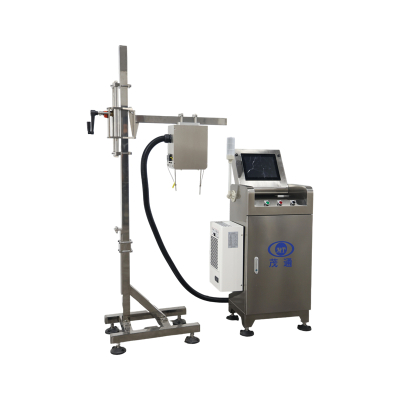
Can Level Detection Technology: The Quality Guardian of Modern Food and Beverage Production Lines
Behind those seemingly simple aluminum cans lies precise quality inspection technology.
On modern food and beverage production lines, hundreds or even thousands of aluminum cans flow through at high speed every minute. Ensuring that the liquid level in each can meets standards is a huge challenge. Traditional manual sampling is not only inefficient but also prone to missed or false detections.
The emergence of level detection equipment, through non-contact detection technology, enables real-time monitoring of every aluminum can on the production line, becoming a key link in ensuring product quality.
1. Technical Principles: A Sophisticated Combination of X-ray and Sensing Technology
The core technology of aluminum can level detection equipment is based on principles of physics and precision sensing technology. Mainstream equipment uses the principle of X-ray imaging: when the can passes through the X-ray emission channel, utilizing the penetrating properties of X-rays, products at different liquid levels form different projections at the X-ray receiving end.
These projection data are acquired at high speed and converted into digital signals. The system analyzes the signal differences to accurately determine the liquid level.
Another common technology is ultrasonic or optical sensing. Optical inspection technology scans the can with lasers or infrared light, analyzing the liquid level through reflected signals; while ultrasonic technology utilizes the differences in the propagation characteristics of sound waves in different media for measurement.
Both technologies employ non-contact measurement methods, avoiding direct contact with the product. This meets food hygiene and safety standards without causing any damage to the can or label.
The detection system performs real-time comparisons using preset standard parameters. Once a product with an unqualified liquid level is detected, an automatic rejection mechanism is immediately triggered, removing the defective product from the production line.
This process occurs within milliseconds, ensuring the uniformity and stability of the products leaving the factory.
2. Technological Advantages, Precise and Efficient Quality Control Solution
Aluminum can liquid level detection equipment has significant advantages over traditional manual inspection. In terms of detection accuracy, modern liquid level detection equipment can achieve a measurement accuracy within ±0.5mm, with some high-end models such as the MT-HFX-06 even reaching an extremely high accuracy of ±0.4mm.
This accuracy far exceeds the limits of human visual perception, effectively preventing problems such as insufficient liquid level (affecting consumer experience) or excessive liquid level (leading to overflow or poor sealing).
In terms of production efficiency, high-speed testing equipment can process 400 to 2000 containers per minute; for example, the MT-HFX-06 model can process up to 1500 cans per minute, meeting the demands of high-speed production lines. This high efficiency ensures continuous production line operation without slowing down, significantly increasing overall capacity.
The testing equipment also boasts excellent flexibility and adaptability. Through modular design or parameter adjustments, the same equipment can accommodate containers of different capacities (250ml to 1000ml) and shapes, including two-piece cans, three-piece cans, PET bottles, and glass bottles, among other packaging forms.
The equipment can operate stably in complex industrial environments with humidity, vibration, or varying light conditions, exhibiting strong anti-interference capabilities.
From a hygiene and safety perspective, non-contact testing technology avoids the risk of product contamination, complying with food hygiene and safety standards such as HACCP and FDA. Simultaneously, the equipment does not damage the can or label, ensuring the integrity of the product's appearance.
3. Core Functions: Intelligent Data Management and Quality Traceability
Modern liquid level testing equipment is not merely a simple measuring tool, but also a crucial component of an intelligent quality management system. These devices possess the capability to simultaneously detect high and low liquid levels, enabling multi-parameter quality assessment in a single operation.
In addition to basic liquid level detection, advanced models can integrate functions such as liquid level leak detection, vacuum detection, and inkjet printing detection, achieving one-stop quality monitoring.
Real-time monitoring and alarm systems are another major highlight. When an abnormal liquid level is detected, the equipment immediately triggers an audible and visual alarm and automatically rejects defective products, preventing the generation of batches of substandard goods. Some systems also support interlocking shutdown functions, automatically suspending the production line when the defect rate exceeds a threshold.
Data recording and analysis functions make quality management more precise. The testing equipment can store large amounts of production data, supporting production batch traceability and quality analysis, helping companies optimize their processes.
For example, a filling management system can analyze the working status of specific filling heads through statistical data analysis, enabling predictive maintenance.
Advanced testing equipment also supports industrial IoT integration, seamlessly connecting to PLC systems or factory-level monitoring platforms to achieve real-time visualization and remote monitoring of production data, laying the foundation for intelligent manufacturing.
4. Application Scenarios and the Entire Chain Impact from Production Line to Brand Value
Can level detection technology plays a crucial role in multiple scenarios. In the quality control stage of a filling line, the equipment is typically installed after filling and capping to perform 100% inspection of each container, ensuring that defective products do not flow into the next process.
For carbonated products such as beer and carbonated beverages, the detection equipment can also simultaneously perform vacuum or pressure testing to identify products with leaks or poor seals.
In production line upgrades and renovations, level detection equipment is a key piece of equipment to replace traditional manual sampling, significantly improving the intelligence level of the production line. A manufacturing company adopting automated detection equipment can reduce 2-3 quality inspection positions while significantly reducing the false detection rate.
During the new product development and promotion stage, the rapid changeover capability of the detection equipment is particularly important. Companies can quickly adapt to new can types through parameter adjustments, shortening the product launch cycle and supporting flexible production models for small batches and multiple varieties.
From a brand protection perspective, consistent level control is directly related to consumer experience and brand reputation. Uneven liquid levels in products can easily lead to consumer complaints, while detection equipment ensures uniform liquid levels in every can, maintaining brand image.
5. Implementation Considerations: Key Factors in Selecting and Configuring Detection Equipment
Selecting and implementing a can level detection system requires comprehensive consideration of multiple factors. The detection speed must match the production line pace; companies should select the appropriate model based on actual production capacity needs.
Detection accuracy requirements depend on product characteristics and quality standards. For most beverage products, ±1mm accuracy is sufficient, but for high-value products, ±0.5mm or even higher accuracy may be required.
Equipment compatibility is also crucial, including support for can types and materials, and whether additional tooling is needed.
Installation environment requirements also need to be assessed in advance. The equipment has specific temperature and humidity requirements, typically operating within a 0-50℃ temperature range and with humidity below 90% to prevent condensation. Sufficient space on the production line must also be ensured for installing the detection equipment and rejection mechanism.
Return on investment analysis is an important basis for decision-making. The price of a single liquid level detection system ranges from tens of thousands to hundreds of thousands of yuan, but the cost can be quickly recovered by reducing product waste, lowering labor costs, and avoiding customer complaints.
With the advent of Industry 4.0, can liquid level detection technology is developing towards greater intelligence. Future detection equipment will be more deeply integrated into industrial IoT systems, enabling real-time monitoring and data analysis globally.
Simultaneously, the introduction of machine learning algorithms will give the equipment self-learning capabilities, allowing it to optimize detection parameters based on historical data and predict quality trends in advance.
For food and beverage manufacturers, investing in advanced liquid level detection technology is not only a necessary means of quality control but also a strategic choice to enhance brand value and win consumer trust.