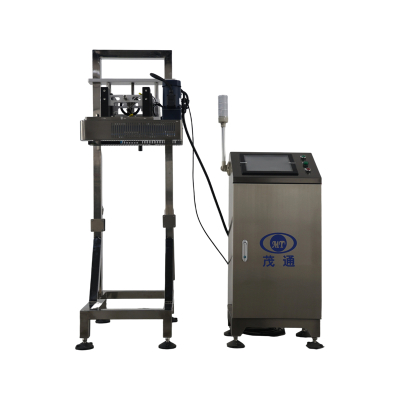
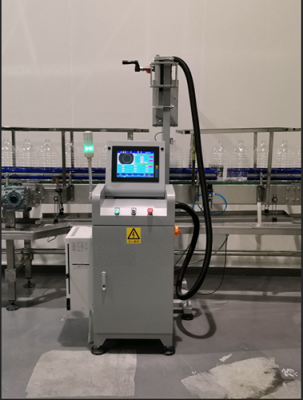
Automatic Visual Inspection Machine Keeps BC Caps Under Control
For packaging operations handling BC series cans, maintaining cap integrity is paramount. Defects are most effectively managed when inspection occurs directly on the production line, without physical contact or slowing down the conveyor. Our Automatic Visual Inspection Machine, model Automatic Visual Inspection Machine, is specifically engineered to provide fully automated, non-contact online inspection of BC can caps. In its standard configuration, this sophisticated machine processes up to 400 cans per minute, accommodating cans with volumes ranging from 100 mL to 1000 mL, and utilizes four high-resolution cameras for comprehensive 360° cap image inspection.
What the Automatic Visual Inspection Machine Examines
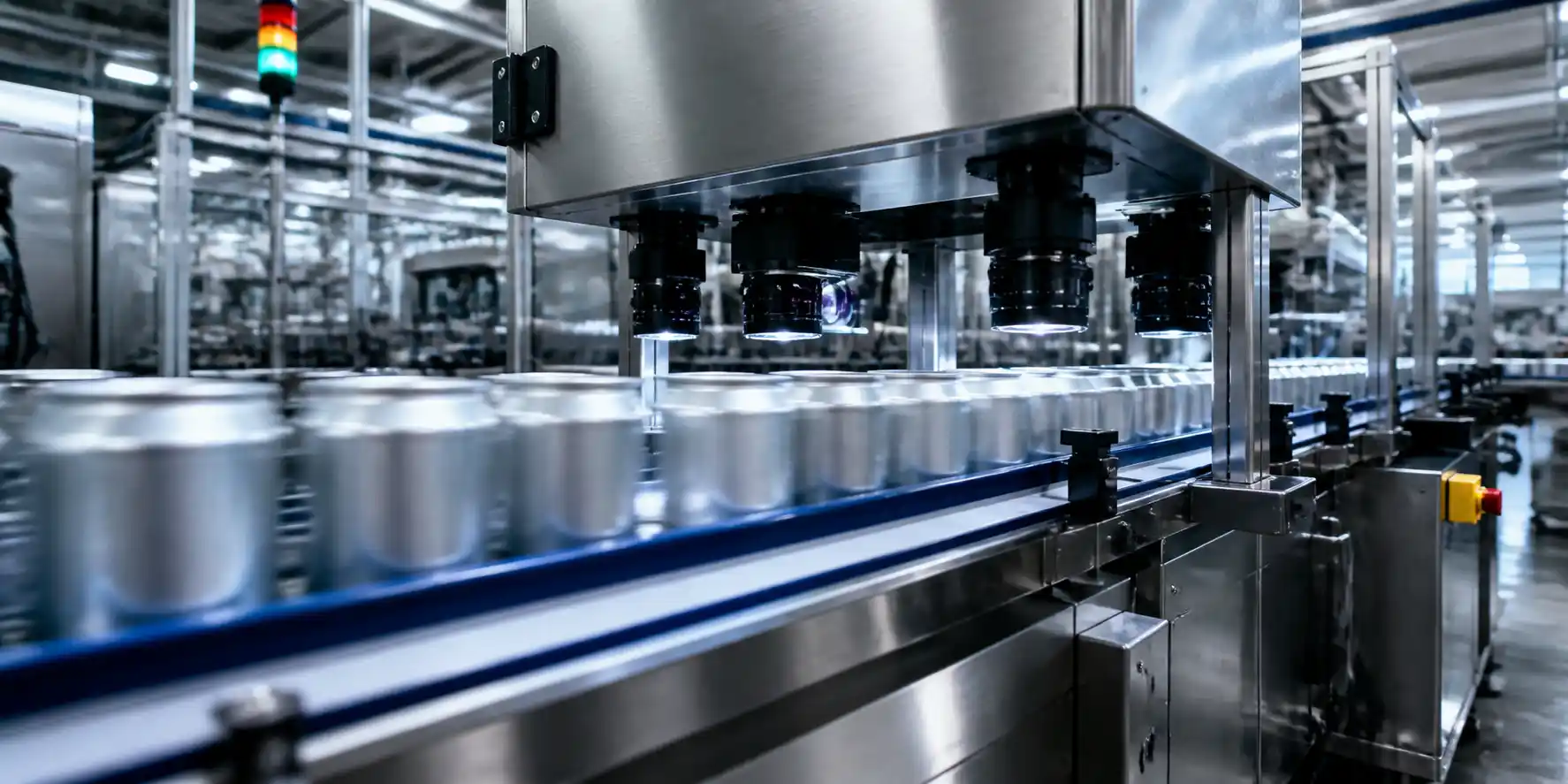
Our Automatic Visual Inspection Machine is tailored for stringent quality control of BC can caps on packaging lines operating at speeds of up to 400 cans per minute. Its comprehensive inspection capabilities cover critical defect conditions, including missing covers, broken bridges, and various forms of deformed covers. This system leverages advanced machine vision technology to meticulously examine cap features directly on the line, ensuring that any unqualified cans are automatically removed from the production flow.
The system's design incorporates four strategically placed cameras, enabling the Automatic Visual Inspection Machine to capture cap images from every angle, providing a complete 360° view of the inspection area. This all-around perspective is crucial, as subtle defects like cap-edge lifting, thread twisting, or bridge disconnections might not be consistently visible from a single viewpoint. By combining synchronized imaging with precise container tracking, our Automatic Visual Inspection Machine accurately correlates each inspection result with its corresponding can, ensuring reliable identification before rejection.
Seamless Workflow from Detection to Rejection
The inspection process with the Automatic Visual Inspection Machine follows a precise and integrated sequence. It begins when a positioning sensor detects an incoming can, prompting the control unit to immediately record its unique ID and the current encoder value. Subsequently, this same sensor triggers the cameras to capture high-resolution images of the can cap. These images are then swiftly analyzed by the sophisticated image processor.
The processing results are instantly transmitted to the human-machine interface (HMI) for dynamic real-time display, as well as to the control unit for managing rejection actions. If a can is identified as unqualified, the PLC (Programmable Logic Controller) promptly issues a command to the rejector mechanism, which then precisely removes the can corresponding to that specific ID from the line. This integrated approach ensures seamless operation and immediate quality correction.
This makes our Automatic Visual Inspection Machine much more than just a camera station; it effectively functions as a comprehensive defect detection and rejection system. It combines high-speed image acquisition, advanced image processing, intuitive HMI visualization, robust PLC control, and efficient online rejection into a single, cohesive process. For facilities already employing other critical quality gates, such as an Empty Can Body Detection Machine before filling or a Liquid Level Inspection Machine for fill-level accuracy, our BC can cap inspection solution plays a crucial role further down the line, ensuring complete product integrity.
Defect Criteria and Proven Performance
Our Automatic Visual Inspection Machine operates based on clearly defined defect criteria, each with documented performance metrics to ensure transparent and reliable quality control:
| Inspection Item | Defined Condition | Documented Performance | Rejection Rate |
|---|---|---|---|
| No Cover | Cover completely absent | -- | ≥99.99% |
| Broken Bridge | Gap spacing > 0.5 mm or disconnection at two points | ≥99.99% | -- |
| Deformed Cover | Thread twisting or cap-edge lifting | ≥99.95% | -- |
| Broken Bridge | Disconnection at one point | ≥99.75% | -- |
It's important to consider these values alongside their specific defect definitions. For example, the Automatic Visual Inspection Machine identifies two distinct broken-bridge conditions, each with its own meticulously documented accuracy level. This detailed distinction empowers our clients to accurately assess whether our cap quality requirements precisely match their specific inspection needs and standards.
Electrical and Site Requirements for Optimal Operation
Prior to installation, it is crucial to thoroughly verify the power supply and site conditions. The Automatic Visual Inspection Machine utilizes the following standard electrical configuration, designed for robust and reliable operation:
| Requirement | Specification |
|---|---|
| Main Power | 3 × 380 VAC ±10%, 50 Hz, 3 PH + N + PE |
| Lighting Power | 220 VAC, 50 Hz, single-phase |
| Control Voltage | 24 VDC |
| Total Power Consumption | Approx. 1.0 kW |
| Operating Temperature | 5°C–40°C |
| Relative Humidity | 50–65% RH |
| Altitude | 5–3000 m |
| Noise | ≤85 dB |
For any specialized voltage requirements, advance confirmation is essential, as this may impact equipment specifications, delivery schedules, and overall pricing. Furthermore, factory floor flatness, load-bearing capacity, appropriate storage conditions, consistent lubrication, and regular maintenance must all adhere to applicable national standards to guarantee smooth installation, proper commissioning, and uninterrupted operation of the machine.
Strategic Placement on the Production Line
The Automatic Visual Inspection Machine is designed for seamless integration onto a single-lane conveyor, positioned strategically downstream of the high-temperature sterilizer and air dryer. This placement is crucial, as it allows for the precise inspection of BC can caps immediately following critical upstream processing stages, ensuring that any defective products are identified and removed before they proceed further into the packaging workflow. This machine is purpose-built for its specific role and is not interchangeable with other types of inspection equipment, such as those for bottle mouths or fill levels. For instance, a Bottle Mouth Inspection Machine is specifically engineered to detect deformation and damage in PET/PE bottle mouths, a distinct function from the intricate bridge or cover inspection required for BC can caps.
FAQs
What is the rated speed of the Automatic Visual Inspection Machine?
Our model Automatic Visual Inspection Machine is rated to inspect 400 cans per minute in its standard configuration.
What container sizes does it support?
This Automatic Visual Inspection Machine is compatible with both standard cans and BC cans within the 100–1000 mL volume range.
How does it achieve 360° cap inspection?
It achieves comprehensive 360° visual inspection by utilizing four high-resolution cameras that capture images of BC can caps from all directions simultaneously.
What happens when a defective can is detected?
Upon detection of a defect, the image processor transmits the result to the control unit, and the PLC promptly commands the rejector mechanism to remove the specific can associated with that ID from the production line.
Where should the machine be installed?
Optimal installation is on a single-lane conveyor, positioned after the high-temperature sterilizer and air dryer to ensure post-processing inspection.