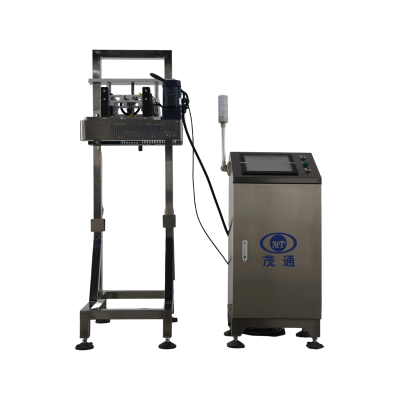
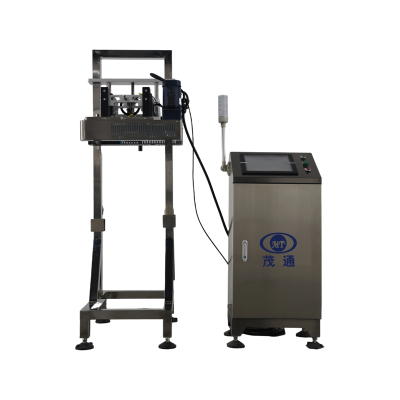
Prepare Automatic Visual Inspection Machine Sites Before Startup
An Automatic Visual Inspection Machine is best integrated into the production line rather than treated as an isolated unit. For BC can cap inspection, this machine performs fully automated, non-contact online inspection with four cameras for 360° cap scrutiny. Its standard rated capacity is 400 cans/min, meaning site conditions, conveyor positioning, power supply, and storage protocols must all align with the documented machine configuration before commissioning can begin.
Confirm the Operating Environment First
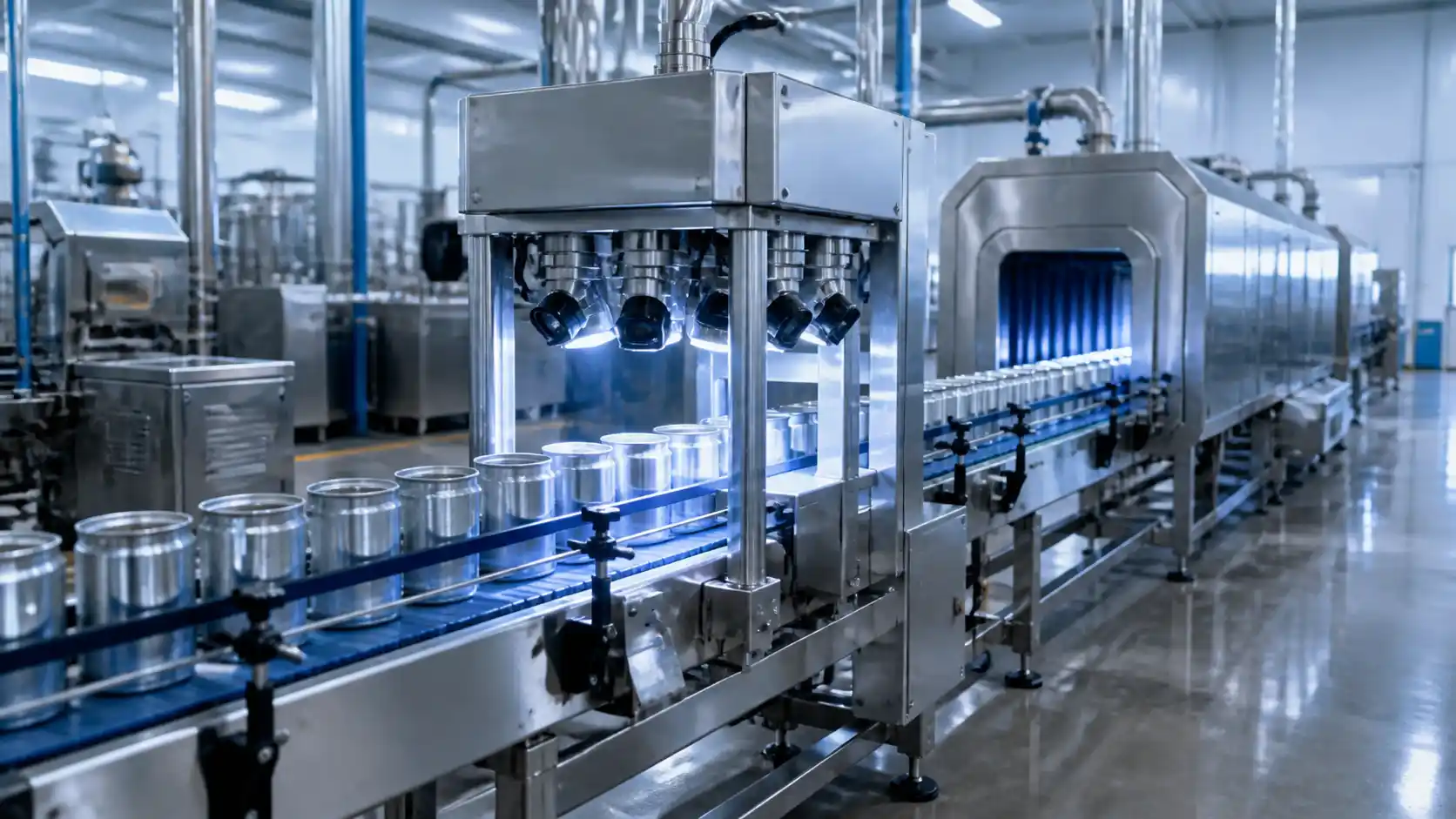
Setting up an Automatic Visual Inspection Machine like the one for BC can caps requires careful environmental planning. The basic operating envelope is quite clear: an altitude of 5–3000 m above sea level, a recommended operating temperature between 5°C–40°C, and a relative humidity of 50–65% RH. While noise is specified at ≤85 dB, the actual reading may fluctuate based on container type, machine load, and the acoustics of the building.
Checking these numbers during layout planning, rather than after the machine arrives, saves a lot of trouble. A site that is excessively humid, lacks proper ventilation, has an uneven floor, or is structurally unsuitable can make installation and long-term operation far more challenging than anticipated. For instance, high humidity can lead to condensation and affect sensitive electronic components, potentially reducing the lifespan and accuracy of the Automatic Visual Inspection Machine. Inaccurate temperature control might cause thermal expansion or contraction, impacting the precision of optical systems. Moreover, floor flatness, load-bearing capacity, and other factory conditions must adhere to relevant national standards to guarantee stable and reliable operation, preventing vibration that could compromise inspection accuracy. Neglecting these environmental factors can result in frequent maintenance, decreased throughput, and ultimately, a lower return on investment.
Match Power Requirements to the Exact Machine
It's a common mistake to assume all inspection systems share identical electrical configurations; buyers should verify specifics. The Automatic Visual Inspection Machine for BC can caps demands 3 × 380 VAC ±10%, 50 Hz, 3PH+N+PE as its primary power supply. Auxiliary lighting needs 220 VAC, 50 Hz, single-phase, and the control voltage runs on 24 VDC. Total power consumption for this system is approximately 1.0 kW.
Any unique voltage requirements should be confirmed well in advance. A power mismatch can significantly affect equipment specifications, delay delivery arrangements, and complicate commissioning. For instance, operating the machine with incorrect voltage can lead to overheating, component failure, and even void the warranty. Stable power delivery is paramount for consistent performance, as fluctuations can impact the sensitive cameras and processors of the Automatic Visual Inspection Machine, leading to inaccurate readings or false rejections. Procurement teams will find this one of the easiest checks to do early, yet one of the most expensive to delay, potentially requiring costly electrical modifications or even machine replacement if overlooked.
Place the Machine at the Right Conveyor Point
The installation position of an Automatic Visual Inspection Machine is highly application-specific. The BC can cap inspection system, for instance, is engineered for a single-lane conveyor located downstream of the high-temperature sterilizer and air dryer. At this precise stage, its four-camera workstation performs a comprehensive 360° inspection of BC can caps, facilitating the automatic rejection of any defective cans.
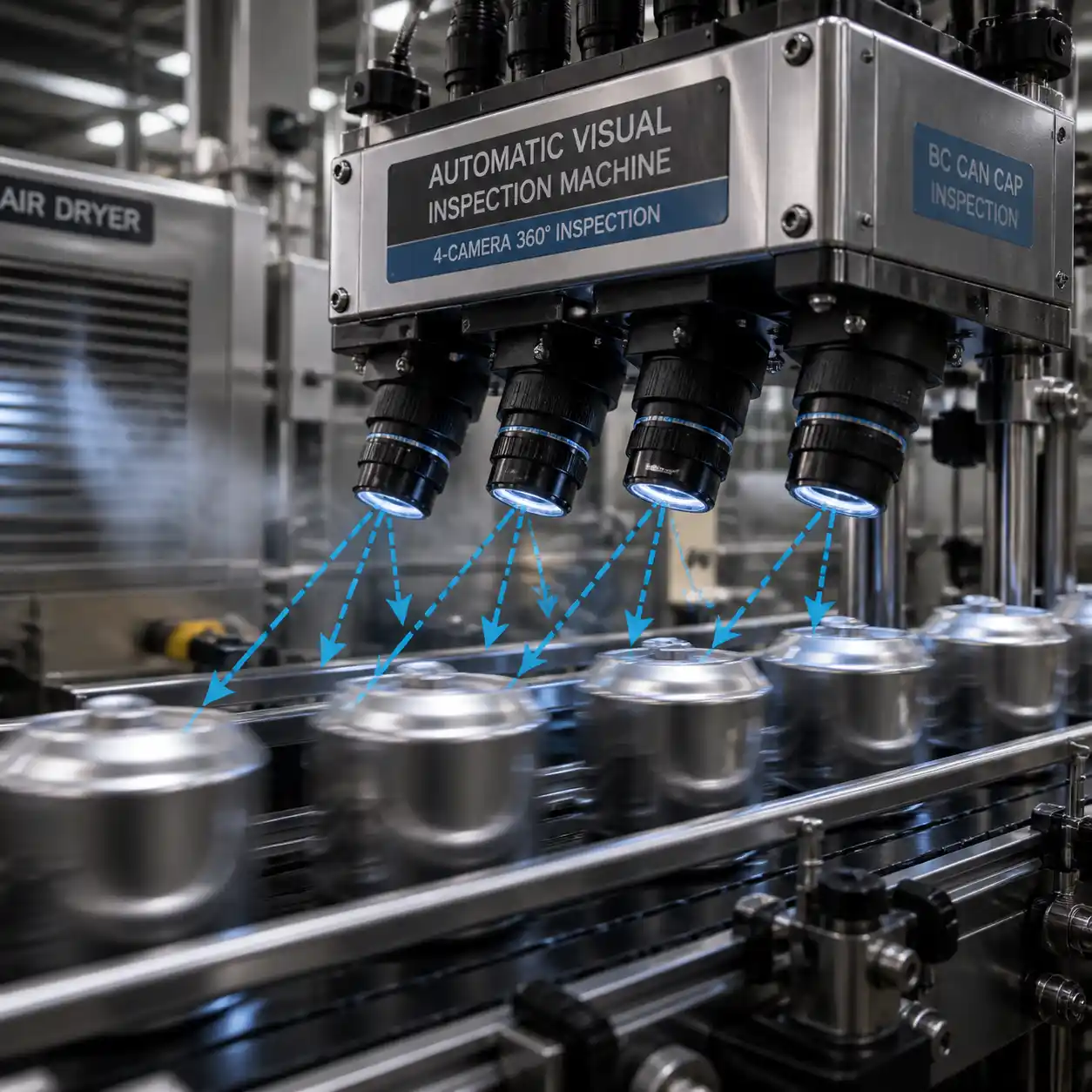
This specific placement is critical because the machine targets BC can cap defects such as broken bridges and cap deformation, including thread distortion and twisted bottoms, which are often post-sterilization issues. Inspecting after drying ensures that no water droplets interfere with image clarity, allowing the vision system to accurately identify minute flaws. Given its role at a precise production-line stage, the conveyor position is a core specification, not a general preference. Incorrect placement could lead to missed defects, unnecessary product recalls, or disruptions in the production flow, undermining the very purpose of implementing an advanced Automatic Visual Inspection Machine.
Do Not Copy Requirements From Related Systems
A valuable point of comparison is the Empty Can Optical Inspection Machine. While it shares similar common environmental ranges of 5–3000 m, 5°C–40°C, and 50–65% RH with the BC can cap inspection system, its installation location and inspection role are distinctly different.
The empty-can detector boasts a rated capacity of 1,000 cans/min and is installed on a single-lane conveyor upstream of the filling machine. Its setup also includes a specific requirement for the customer to provide a 2-meter straight conveyor section with a 2 cm gap between cans to ensure optimal inspection performance. This contrast highlights why specific Automatic Visual Inspection Machine requirements need validation per model and application, even within the same broader machine vision category. Each machine, whether it's for BC can caps or empty cans, has unique operational parameters and placement needs directly tied to its specific inspection targets and the stage of the production line it serves. Failing to recognize these subtle yet crucial differences can lead to significant operational inefficiencies, installation delays, and suboptimal defect detection.
Include Storage in Pre-Commissioning Checks
Proper storage conditions are vital even before installation begins. Upon delivery, the Automatic Visual Inspection Machine for BC can caps and all its associated components must be stored in strict compliance with national standards. During this storage period, appropriate lubrication and maintenance are essential to prevent surface damage or deformation that could compromise installation, commissioning, or future operational reliability.
For instance, improper storage in damp or dusty environments can lead to corrosion of mechanical parts or ingress of foreign particles into sensitive optical components. Lack of adequate lubrication during extended storage can cause seals to dry out or moving parts to seize, complicating the initial setup and potentially requiring costly repairs before the machine even starts running. Before the machine is moved into position, the site team should thoroughly inspect all stored parts, confirm the absence of any visible deformation or surface damage, and complete any necessary lubrication and maintenance tasks. This crucial step bridges proper warehouse handling with a smooth production-line startup, ensuring the Automatic Visual Inspection Machine performs optimally from day one.
Practical Buyer Checklist
| Check Item | Requirement to Confirm |
|---|---|
| Altitude | 5–3000 m above sea level |
| Temperature | Recommended 5°C–40°C |
| Humidity | Recommended 50–65% RH |
| Factory floor | Flatness and load-bearing capacity comply with national standards |
| Main power | 3 × 380 VAC ±10%, 50 Hz, 3PH+N+PE |
| Lighting power | 220 VAC, 50 Hz, single-phase |
| Control voltage | 24 VDC |
| Line position | Single-lane conveyor after sterilizer and air dryer |
| Storage | National-standard storage, lubrication, and maintenance |
FAQs
What is the recommended temperature for the Automatic Visual Inspection Machine?
The BC can cap Automatic Visual Inspection Machine specifies a recommended operating temperature range of 5°C–40°C. Maintaining this range is vital for the stability and accuracy of its sensitive optical and electronic components.
What humidity range should the site maintain?
The recommended relative humidity range for optimal performance of the Automatic Visual Inspection Machine is 50–65% RH. This helps prevent issues like condensation or static electricity build-up.
Where should the BC can cap inspection machine be installed?
It should be installed on a single-lane conveyor downstream of the high-temperature sterilizer and air dryer. This precise positioning ensures that cans are clean and dry for accurate inspection of cap defects.
Does it use the same layout as an empty-can detector?
No, it does not. The empty-can detector is installed upstream of the filling machine and requires a specific 2-meter straight conveyor section with a 2 cm gap between cans. Each Automatic Visual Inspection Machine model has unique installation requirements based on its function.
What should buyers check before commissioning?
Buyers should rigorously confirm the environmental conditions, factory floor compliance, electrical supply (main, lighting, control voltages), exact conveyor positioning, and proper storage conditions. A thorough inspection of the equipment's physical state for any visible damage or deformation is also crucial before starting the commissioning process for the Automatic Visual Inspection Machine.