Control BC Can Cap Defects Before They Move Further
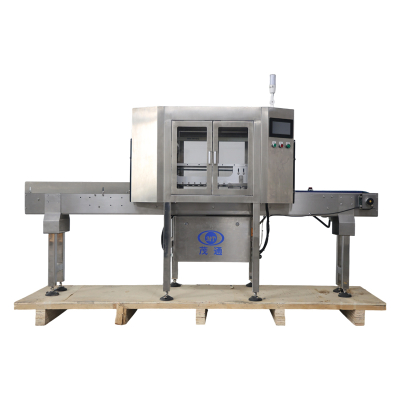
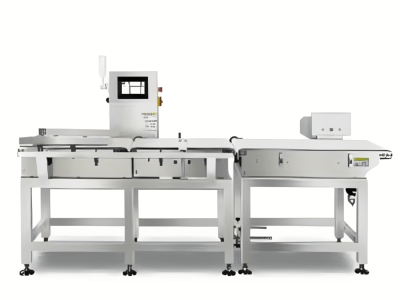
For can and BC can packaging lines, maintaining impeccable cap quality is a constant challenge. Defects, if not caught early, can lead to costly recalls, production delays, and damage to brand reputation. That's why online, high-speed inspection is so crucial—it detects anomalies before defective containers move further down the line, saving time and resources. The Automatic Visual Inspection Machine BC Can Cap Inspection Machine stands out as an advanced Automatic Visual Inspection Machine specifically engineered for comprehensive 360° BC can cap quality control. With its four-camera configuration, this system delivers non-contact online inspection and automatically rejects any unqualified cans, all while maintaining production speeds of up to 400 cans/min.

Why Full Directional Coverage is Essential for BC Can Cap Inspection
BC can caps can exhibit a variety of subtle defects that are often difficult to spot from a single perspective. Issues like broken bridges, cap deformation, thread twisting, twisted bottoms, or cap-edge lifting can manifest on different parts of the cap structure. A partial inspection simply isn't enough to guarantee consistent quality. This is precisely why the Automatic Visual Inspection Machine employs four strategically positioned cameras, enabling a complete 360° image inspection of every BC can cap. This comprehensive approach ensures that no defect goes unnoticed, providing unparalleled reliability.
This robust Automatic Visual Inspection Machine is specifically tailored for can and BC can packaging lines where rigorous cap condition control is paramount. It accommodates a wide range of containers, from standard cans to BC cans, with volumes spanning 100 mL to 1000 mL, making it a versatile solution for diverse production needs.
Inside the Four-Camera Inspection Workflow: Precision in Motion
At the heart of the Automatic Visual Inspection Machine efficiency is a tightly integrated inspection process that seamlessly combines image capture, real-time image processing, precise container tracking, and automated rejection into one smooth, controlled sequence. As a can enters the inspection zone, a positioning sensor detects its arrival, and the control unit instantly records the unique can ID along with its current encoder value. This critical information ensures continuous traceability.
Upon detection, the sensor triggers the four cameras to simultaneously capture high-resolution images of the can cap from all angles. These images are then immediately fed to the powerful image processor, which analyzes them in real time. The inspection results are not only displayed dynamically on the Human-Machine Interface (HMI) for operator monitoring but are also transmitted directly to the control unit. If a defect is identified, the Programmable Logic Controller (PLC) receives the unqualified signal and promptly instructs the rejector mechanism to remove the corresponding can, ensuring only compliant products proceed. This meticulous synchronization guarantees that every inspection result is accurately matched to its container, preventing any mix-ups until rejection is complete.

Automatic Visual Inspection Machine: Key Specifications at a Glance
Understanding the technical specifications of the Automatic Visual Inspection Machine helps assess its fit for specific production environments. This machine is engineered for optimal performance and integration.
| Item | Specification |
|---|---|
| Equipment Name | BC Can Cap Inspection Machine |
| Model | Automatic Visual Inspection Machine |
| Quantity | 1 set |
| Rated Speed | 400 cans/min |
| Applicable Containers | Cans, BC cans |
| Container Volume Range | 100 mL–1000 mL |
| Applicable Production Lines | Can and BC can packaging lines operating ≤400 cans/min |
| Camera Configuration | Four cameras for 360° BC can cap inspection |
| Installation Position | Single-lane conveyor downstream of the high-temperature sterilizer and air dryer |
| Total Power Consumption | Approx. 1.0 kW |
| Noise Level | ≤85 dB |
It's worth noting that actual equipment noise levels might vary based on factors like the specific container type, machine load, ambient building acoustics, and overall operating conditions. These specifications highlight the machine's capability to deliver high-speed, precise inspection within demanding industrial settings.
Defined Defect Criteria and Documented Performance
The Automatic Visual Inspection Machine focuses on specific, clearly defined BC can cap conditions, which simplifies the evaluation process for buyers. This precision allows for direct comparison against real production quality requirements, ensuring that the Automatic Visual Inspection Machine addresses the most critical defect types.
| Inspection Item | Defined Condition | Documented Performance |
|---|---|---|
| No Cover | Cover absent | Rejection rate ≥99.99% |
| Broken Bridge | Gap spacing >0.5 mm or disconnected at two points | Accuracy ≥99.99% |
| Deformed Cover | Thread twisting or cap-edge lifting | Accuracy ≥99.95% |
| Broken Bridge | Disconnected at one point | Accuracy ≥99.75% |
These clear-cut criteria are incredibly valuable for manufacturers evaluating machine vision solutions for cap inspection. Having transparent defect definitions upfront ensures a smoother commissioning process and helps establish precise quality benchmarks for production. The high accuracy and rejection rates underscore the machine's reliability in maintaining product integrity.
Installation and Crucial Site Conditions for Early Confirmation
Proper installation and a suitable operating environment are vital for the optimal performance and longevity of any advanced inspection system. The Automatic Visual Inspection Machine is designed for installation on a single-lane conveyor, ideally positioned downstream of both the high-temperature sterilizer and the air dryer. This placement ensures that caps are dry and stable before inspection, maximizing accuracy.
Before deploying the Automatic Visual Inspection Machine, it's essential for buyers to meticulously review and confirm various site conditions, including the ambient environment, power supply infrastructure, storage requirements, and floor specifications. Key operational considerations include:
Any specific voltage requirements outside the standard should be communicated and confirmed well in advance, as this might influence equipment specifications, delivery schedules, and pricing. Proactive planning ensures a seamless integration into your existing production line.
Practical Buying Considerations for Production Excellence
For any production team, the decision to invest in an Automatic Visual Inspection Machine goes beyond mere speed. The most important questions revolve around whether the machine's inspection scope, rejection logic, optimal installation position, and utility requirements align perfectly with their existing production line. The Automatic Visual Inspection Machine is specifically designed for can and BC can packaging lines operating at speeds up to 400 cans/min, offering a specialized solution. Its four-camera configuration ensures comprehensive 360° visual inspection of BC can caps, coupled with efficient online rejection. This tailored approach helps manufacturers achieve consistent product quality, reduce waste, and enhance overall operational efficiency.
For detailed project discussions or to learn more about how the Automatic Visual Inspection Machine can enhance your production quality, please reach out to Jinan Maotong Inspection Equipment Co., Ltd. You can contact us at +8618612569280 or via email at qibin@maotongtech.com. Our address is City Phase ll, No.4567 Gongye North Road, Licheng District, Jinan City, Shandong Province.
FAQs
Can the Automatic Visual Inspection Machine operate at 400 cans per minute?
Yes, absolutely. The Automatic Visual Inspection Machine has a documented rated speed of 400 cans/min, making it suitable for high-speed can and BC can packaging lines operating at or below this capacity.
What types of defects does this Automatic Visual Inspection Machine detect?
This machine is engineered to inspect specific BC can cap defects. This includes the absence of a cover, various forms of broken bridges such as gaps greater than 0.5 mm or disconnections at one or two points, and deformed covers, which encompass thread twisting or cap-edge lifting.
Does the system automatically reject defective cans?
Indeed, it does. When the system detects an unqualified product, the PLC immediately issues instructions to the rejector mechanism to remove the can corresponding to the tracked ID, ensuring seamless online defect removal.
Where is the ideal installation location for the machine?
The specified installation position for the Automatic Visual Inspection Machine is on a single-lane conveyor, strategically placed downstream of both the high-temperature sterilizer and the air dryer to ensure optimal inspection conditions.