Visual Inspection for Empty Beverage Can Material Shortage: The Quality Guardian in Modern Packaging Industry
Introduction: Quality Challenges in Beverage Can Production
As one of the mainstream forms of modern food and beverage packaging, beverage cans are widely used worldwide due to their advantages such as lightness, good sealing, and ease of transportation. According to statistics, there are no less than 8 million secondary packaging enterprises in the country, with the food industry having the highest frequency of packaging use. However, on high-speed production lines, empty beverage cans may develop various defects during the production process and conveyor chain transportation, such as can mouth deformation, can body dents, internal foreign objects, and material shortages. If these defects are not detected and removed in a timely manner, they will directly affect the product quality of subsequent filling processes and may even pose a threat to consumer safety.
Traditional manual inspection methods suffer from low efficiency, high error rates, and high costs, making it difficult to meet the demands of modern production lines that operate at speeds of thousands of cans per minute. The introduction of machine vision technology has brought a revolutionary solution to the detection of material shortages in empty beverage cans.
Basic Principles and Composition of Machine Vision Inspection Systems
System Working Principle
The visual inspection system for empty beverage can material shortages is based on machine vision technology. It captures images of beverage cans through industrial cameras and uses image processing algorithms to analyze image features, achieving automatic defect identification and classification. When beverage cans pass through the imaging system, photoelectric sensors trigger the light source strobe and industrial smart cameras to obtain high-speed beverage can images. The smart cameras analyze and process the images, and the electrical control system executes the inspection results, thereby achieving the sorting of defective products.
System Hardware Components
A complete visual inspection system typically includes the following core components:
Imaging System: Includes industrial cameras, lenses, and lighting devices. High-resolution industrial cameras can capture minor defects on the surface of beverage cans, while professional lighting systems ensure high-quality images in different environments.
Image Processing Unit: Usually a high-performance industrial computer or embedded vision controller, responsible for running complex image processing algorithms and analyzing the captured image data in real time.
Motion Control System: Ensures precise positioning and stable transmission of beverage cans during the inspection process, typically including servo motors, encoders, and precision transmission mechanisms.
Rejection Device: Automatically removes unqualified products from the production line based on inspection results, commonly using pneumatic rejection or robotic arm grabbing.
Human-Machine Interface (HMI): Provides an operation interface for easy parameter setting, status monitoring, and data statistics.
Main Inspection Items and Technical Parameters
Common Defect Types
Various defects may occur in empty beverage cans during the production process, mainly including:
Can Mouth Defects: Oval deformation, gaps, uneven long and short sides, etc.
Can Body Defects: Dents, scratches, deformation, indentations, etc.
Internal Foreign Objects: Oil stains, iron filings, dust, and other contaminants.
Material Shortage Issues: Missing or damaged pull tabs, incomplete sealing glue, etc.
Printing Defects: Unclear characters/patterns, missing or incorrect spray codes, etc.
Inspection Accuracy Requirements
Modern visual inspection systems have strict accuracy requirements for various defects:
Can mouth defect detection accuracy: 2mm×3mm, false rejection rate ≤0.3%
Can bottom hole detection accuracy: 3mm×3mm, false rejection rate ≤0.3%
Internal foreign object detection accuracy: 3mm×3mm, false rejection rate ≤0.3%
Can mouth and bottom detection accuracy: 0.2-0.5mm
Can wall detection accuracy: 0.5mm
Inspection speed: Up to 1200 cans/minute
Misjudgment rate: ≤0.2%
Key Technological Breakthroughs and Innovations
Application of 3D Machine Vision Technology
Traditional 2D visual inspection has limitations when dealing with complex curved surfaces and reflective surfaces. In recent years, 3D machine vision technology has been widely applied in the field of beverage can inspection. The high-speed, high-definition 3D machine vision equipment HY-M5, independently developed by Xianyang Technology, is equipped with high-speed, high-definition cameras and a powerful image processing platform. The product's field of view can range from 529x326mm to 1164x979mm, with measurement accuracy reaching the micron level. This system can capture multi-angle 3D images of beverage cans in a short time and construct point cloud models in real time, enabling the inspection and analysis of the overall shape and surface details of beverage cans.
Integration of Deep Learning Algorithms
With the development of artificial intelligence technology, deep learning algorithms have been integrated into visual inspection systems, significantly improving inspection accuracy and adaptability. The Krones Cantronic C inspection system, expanded through deep learning technology, can elevate the quality control of production lines to a new level. Research teams from Tsinghua University have also introduced convolutional neural networks to address the detection of colored pattern defects on the outer surfaces of beverage cans, effectively solving detection challenges in complex scenarios that are difficult for traditional methods to handle.
Multi-Station Synchronous Inspection Technology
To improve inspection efficiency, modern inspection systems adopt multi-station synchronous inspection technology. The Krones Cantronic C inspection machine, with its innovative multi-station workstation, can simultaneously inspect three can areas at once: the flange, bottom, and inner wall. This design not only increases inspection speed but also reduces the equipment's footprint, achieving a "small body, big power" design philosophy.
Inspection Process and Working Modes
Standard Workflow
System Initialization: Input basic product information, model qualified products, and set inspection parameters.
Image Acquisition: Cameras and photoelectric sensors are installed in fixed positions. When products reach the photoelectric sensor location, a trigger signal is immediately generated. After a certain delay, the camera is triggered to capture images, which are then uploaded to the industrial computer for image information processing.
Image Processing: The visual recognition system receives the image information and performs a series of processing and analysis to determine whether the product is acceptable or defective.
Result Output: The interface outputs inspection information in real time. If the product does not meet the preset data, an NG signal is output; if the inspection is OK, the product proceeds to the next process as required by the customer.
Defect Rejection: Based on preset parameters, product inspection judgments are made. Parameters can be set for different areas to flexibly address different inspection requirements for various areas of the same product.
Intelligent Alarm and Data Management
Modern inspection systems typically feature intelligent alarm functions. When the system detects continuous defects, it outputs an alarm signal, displays information in real time, and records inspection data. Meanwhile, inspection data can be uploaded to cloud management systems in real time, providing strong support for production decisions and enabling full traceability of product quality.
Industry Application Cases and Results
Practices of International Leading Enterprises
Rexam Beverage Cans Americas, the world's largest can manufacturing company, adopted a machine vision system provided by Omron Electronics at its factory in Valparaiso, Illinois, USA, for high-speed inspection of aluminum can lids. The system, operating at speeds of hundreds of units per minute, can detect dust-level flaws, replacing traditional manual inspection methods and achieving 24/7 high-quality inspection.
Technological Breakthroughs by Domestic Enterprises
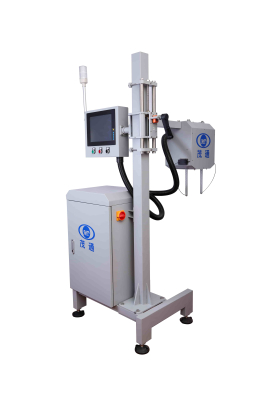
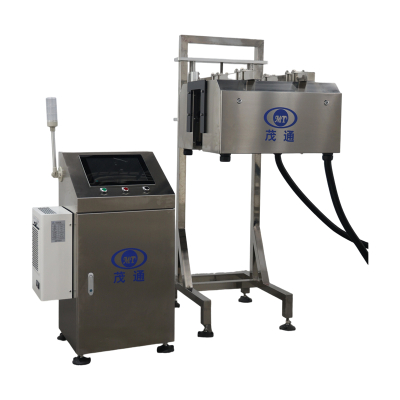
Tianlang Technology's TJKG02 empty beverage can inspection machine integrates the world's advanced camera and optical technologies, using high-speed computer intelligent image analysis systems and expert decision-making systems to determine whether inspection items are qualified. The equipment mainly consists of inspection devices (including internal foreign objects and can mouth inspection), HMI, industrial computer, rejection device, and power distribution cabinet, suitable for high-speed filling production line empty can inspection.
Special Applications in the Dairy Industry
In the dairy industry, Taiyi Detection Technology Co., Ltd. developed the TXR-J series single-source, triple-view X-ray foreign object detection machine for canned milk powder. This equipment can perform foreign object and defect detection on canned and bottled containers. The unique single-source, triple-view system, equipped with the self-developed "Smart Vision Supercomputing" intelligent algorithm, can detect whether spoons are included in the product and has better detection performance for foreign objects in irregular bottle bodies, bottle bottoms, screw mouths, pull tabs of tin cans, and pressed edges.
Technical Challenges and Development Trends
Main Current Challenges
Although machine vision inspection technology has made significant progress, it still faces some challenges in practical applications:
Balancing High Speed and High Precision: Production line speeds continue to increase, placing higher demands on the real-time performance of inspection systems.
Adaptability to Complex Environments: Factors such as lighting changes and vibration interference in production environments affect image quality.
Identification of Diverse Defects: The wide variety and irregular shapes of defect types require algorithms with strong generalization capabilities.
Cost Control: High-performance vision systems are costly, making them difficult for small and medium-sized enterprises to afford.
Future Development Trends
Deep Integration of Artificial Intelligence: Deep learning, transfer learning, and other AI technologies will further integrate with visual inspection, enhancing the system's intelligence and adaptive capabilities.
Multi-Modal Fusion Inspection: Combining X-ray, ultrasound, infrared, and other inspection technologies to form multi-modal fusion inspection solutions, improving the comprehensiveness and accuracy of inspections.
Edge Computing and Cloud Platforms: Utilizing edge computing to improve real-time performance and cloud platforms for centralized data management and analysis, supporting predictive maintenance and quality optimization.
Standardization and Modularization: Promoting the standardization and modular design of inspection systems, reducing deployment and maintenance costs, and improving system scalability.
Human-Machine Collaboration Optimization: Using technologies such as augmented reality (AR) to achieve more efficient human-machine collaboration, simplify operation processes, and reduce technical requirements for operators.
Conclusion
Visual inspection technology for empty beverage can material shortages, as an important component of automation in the modern packaging industry, has evolved from simple image recognition to complex systems integrating 3D vision, deep learning, and intelligent decision-making. As technology advances and costs continue to decrease, visual inspection systems will become more common in small and medium-sized enterprises, providing strong guarantees for quality control across the packaging industry.
In the future, with the deepening of Industry 4.0 and intelligent manufacturing, beverage can visual inspection systems will become more intelligent, networked, and flexible. They will not only detect defects but also optimize production processes and predict equipment failures through big data analysis, truly becoming indispensable intelligent sensing nodes in the smart manufacturing ecosystem. The development of this technology not only improves product quality and production efficiency but also provides consumers with safer and more reliable packaging products, promoting the sustainable development of the entire food and beverage industry.