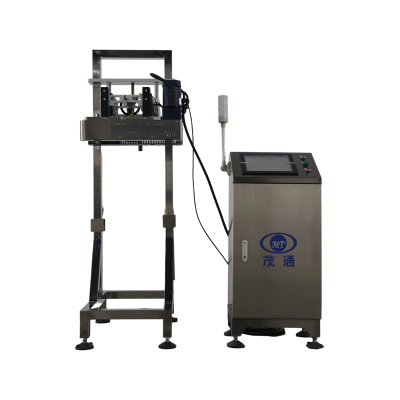
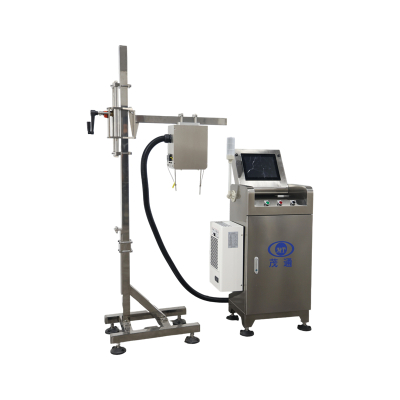
What is a Food X-ray Machine?
A food X-ray machine is a key quality control device on modern food production lines. Utilizing the penetrating properties of X-rays, it efficiently and accurately detects various foreign objects and product defects in food, becoming an important tool for ensuring food safety.
Working Principle and Core Technology
The core technology of a food X-ray machine is based on the physical properties of X-rays. When X-rays penetrate food, different substances absorb the rays to varying degrees due to differences in density and atomic number, creating an image with light and dark contrast on the detector. High-density substances (such as metals and bones) absorb more rays and appear as darker areas in the image.
Modern equipment integrates high-resolution detectors (such as flat panel detectors) and intelligent image processing algorithms (including deep learning technology), enabling it to keenly capture these differences, accurately identify minute foreign objects mixed in with the product, and effectively distinguish foreign objects from the normal structure of the food, ensuring the accuracy and stability of the detection results.
Core Functions and Application Value
The role of a food X-ray machine extends far beyond foreign object detection; it is a multi-functional, integrated, intelligent quality control platform.
Comprehensive Foreign Object Detection: Capable of detecting a variety of foreign objects, including metals (iron, copper, aluminum, etc.), glass, ceramics, stones, hard plastics, rubber, and even bone fragments. For aluminum foil-packaged products, traditional metal detectors have limited effectiveness, while X-ray machines provide clear imaging with a detection accuracy of up to 0.3 mm.
Multiple Quality Controls: In addition to foreign object detection, it can simultaneously perform net content check (determining whether the contents are sufficient or excessive), packaging integrity check (detecting leaks, poor sealing, damage, etc.), and product defect identification (such as missing parts, breakage, shape distortion, etc.).
Compliance and Brand Protection: Helps companies meet stringent domestic and international food safety regulations and certification requirements such as HACCP and IFS. By preventing problematic products from entering the market, it effectively reduces consumer complaints and product recall risks, protecting brand reputation.
Main Application Scenarios
Food X-ray machines are suitable for almost all types of food. Here are some typical application scenarios:
| Application Scenarios | Example Targets |
| Meat and Aquatic Product Processing | Detects bone fragments, cartilage, metal objects such as injection needles, and other incompletely deboned food; identifies small fish bones in fish paste and fish balls |
| Snack Foods and Baked Goods | Detects metal fragments, glass shards, and plastic particles in potato chips, biscuits, and candies |
| Dairy Products and Bottled Beverages | Detects lumps or foreign objects in milk powder; checks bottle cap seals and liquid levels |
| Condiments and Fruit and Vegetable Processing | Detects impurities in powdered seasonings; identifies stones mixed into fruits and vegetables |
| Frozen Foods | Works stably in low-temperature environments; detects bone fragments, stones, etc., that may be mixed into dumplings, glutinous rice balls, etc |
How to Choose a Suitable Food X-ray Machine
Choosing the right equipment requires comprehensive consideration of product characteristics and production needs. The equipment on the market can be mainly divided into several types, and their characteristics are shown in the table below:
| Equipment Type | Features | Applicable Products |
| General-purpose X-ray Machine | Meets the basic foreign object detection needs of conventional solid and semi-solid foods, with a relatively fast detection speed | Suitable for candies, biscuits, and conventional meat products |
| Special-purpose X-ray Machine | Designed for specific products or problems, with higher detection accuracy | For example, specifically designed for oily foods (such as hot sauce and vacuum-packed meat products), effectively solving the problem of false alarms caused by oil leakage and contamination of the seal. Suitable for aluminum foil-packaged foods, oily foods, and bulk meat and seafood |
| Multi-functional Integrated X-ray Machine | Integrates multiple functions such as foreign object detection, checkweighing, and packaging defect identification, achieving one-stop quality control | Suitable for production lines with comprehensive and high-standard quality control requirements |
Besides product type, the following performance indicators should also be emphasized:
Detection Accuracy: Usually measured by the smallest foreign object diameter that can be reliably detected (e.g., a 0.3mm metal ball).
Processing Speed:The number of products that can be inspected per minute, which needs to be matched with the production line cycle time. High-end models can process up to 1000 pieces per minute.
Stability and Repeatability: Ensuring highly consistent and reliable test results across different time periods and batches of products.
Intelligence Level: Whether it possesses intelligent functions such as AI algorithms, data traceability, and remote maintenance, which significantly improves operational convenience and long-term benefits.
Development Trends and the Intelligent Future: Food X-ray machine technology continues to advance, with key trends including:
Higher Precision and Sensitivity: Developing towards micron-level and even nanometer-level detection capabilities.
Deep Intelligence: Widespread application of artificial intelligence and deep learning algorithms, enabling equipment to have stronger self-learning and adaptive capabilities, further improving recognition accuracy and reducing false alarms.
Multi-Technology Integration: Combining X-ray detection with optical detection, metal detection, near-infrared detection, and other technologies to build a multi-dimensional and more comprehensive quality protection system.
Industry 4.0 Integration: Integrating with IoT and cloud computing technologies to achieve remote equipment monitoring, predictive maintenance, and collaborative analysis of quality data from multiple factories, assisting enterprises in intelligent decision-making.
Summary
Food X-ray machines, with their precise and comprehensive inspection capabilities, build a solid safety barrier for food production companies. When selecting equipment, the key is to thoroughly analyze the characteristics of your own products and the specific needs of your production line to find the optimal balance between functionality, performance, and budget.
Hopefully, this information helps you better understand food X-ray machines. If you have more specific questions about the inspection of specific types of food (such as liquid products or foil-packaged products), I'd be happy to provide further information.