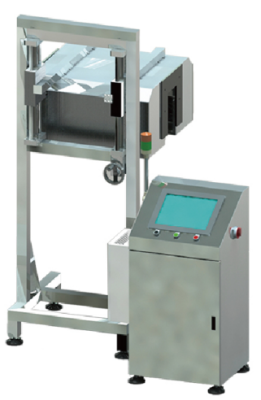
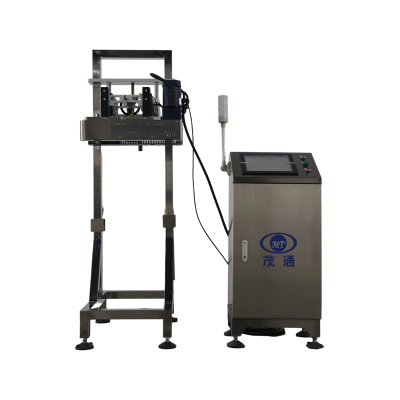
Inkjet Printing Visual Inspection: The "Eagle Eyes" and "Quality Sentinels" of Modern Production Lines
On high-speed intelligent production lines, a system safeguards the "identity information" of every product at millisecond speeds.
In modern industrial production, the markings on product packaging—production date, shelf life, batch number, QR code, etc.—are not only the product's legal identity card but also a key carrier for enterprises to achieve quality traceability, anti-counterfeiting, and management. However, inkjet printing errors are unavoidable in high-speed production environments, and traditional manual sampling inspection can no longer meet quality requirements.
Inkjet printing visual inspection systems have emerged to address this need, becoming the quality guardians of intelligent manufacturing.
01 Technical Principles: How do inkjet printing visual inspection systems achieve "eagle eyes"?
Essentially, an inkjet printing visual inspection system is an automated inspection device integrating optical imaging, image processing, and pattern recognition technologies. Its workflow is based on a precise closed-loop control system, capable of completing the entire process from image acquisition to quality judgment in an extremely short time.
The system first captures the inkjet printing image on the product surface using a high-speed industrial camera under specific light source conditions. In the optical imaging stage, the light source setting is crucial, ensuring clear, high-contrast images are acquired regardless of changes in ambient light.
The image processing system then preprocesses, locates, segments, and recognizes the acquired images. This process relies on advanced machine vision algorithms, capable of adapting to complex conditions such as reflections and curved surfaces.
Finally, the system compares the recognition results with a preset standard template to accurately determine the quality of the inkjet printing. The entire inspection process is completed within milliseconds, truly achieving 100% inspection of every product on a high-speed production line.
Notably, the latest technology effectively overcomes the impact of lighting variations on detection accuracy by dynamically adjusting image thresholds and regional grayscale averages. This morphological processing-based inkjet printing area preprocessing method ensures high efficiency and accuracy while reducing reliance on complex deep learning models.
02 System Composition: Collaborative Operation from "Eyes" to "Brain"
A complete inkjet printing vision inspection system consists of multiple components working collaboratively, forming a complete chain from image acquisition to execution.
The hardware mainly includes an industrial camera, lens, light source, trigger sensor, and rejection device. Industrial cameras are responsible for image acquisition, and their resolution directly determines the detection accuracy. Lighting systems (such as LED ring lights and backlights) ensure stable image quality.
Trigger sensors (usually photoelectric sensors) act as "sentinels" in the detection system, sensing when a product reaches a predetermined position and sending a shooting signal to the camera.
The rejection device is the system's "executor." For products that fail inspection, the system removes them from the production line using pneumatic pushers or air blowing devices, achieving fully automated quality control.
Software algorithms are the system's brain. Modern inkjet printing inspection software typically includes OCR (Optical Character Recognition) functionality, capable of reading and verifying the correctness of the inkjet content.
More advanced systems also integrate AI algorithms, using high-resolution imaging and image analysis to identify the "physical fingerprints" of the inkjet dots' microscopic morphological distribution, providing a unique identifier for each product.
03 Application Scenarios: Quality Guardians in Multiple Industries
Inkjet printing visual inspection technology has been widely applied in various industries with strict marking requirements, becoming a standard feature of high-quality manufacturing.
In the food and beverage industry, the system is used to detect production dates, batch numbers, and QR codes on bottle caps, bottles, can bottoms, and packaging bags. For example, after introducing AI vision inspection, a well-known beverage factory achieved an inspection speed of 300 bottles per minute, with a near-zero missed detection rate for inkjet coding.
The pharmaceutical industry has extremely stringent requirements for inkjet coding inspection. The system can detect batch numbers, expiration dates, and electronic regulatory codes on pharmaceutical foil, vials, and medicine boxes, directly related to medication safety.
In the electronics industry, the system can read micro-QR codes on PCB boards and components, enabling precise product traceability. The automotive parts industry uses this system to inspect laser markings on engine parts and other components, ensuring that each part has a unique "identity card."
Furthermore, in the daily chemical industry, vision inspection systems are used to inspect inkjet coding on cosmetics and detergents, maintaining brand image. These diverse industry applications collectively demonstrate the wide applicability and importance of this technology.
04 Technological Advantages: A Revolutionary Advancement Surpassing Manual Inspection
Compared to traditional manual sampling inspection, inkjet coding vision inspection systems offer revolutionary advantages.
The most significant advantage is its 100% inspection capability. The system can work tirelessly 24/7, easily matching the inspection speed of high-speed production lines carrying hundreds or even thousands of pieces per minute, completely eliminating missed inspections.
In terms of accuracy, the vision system, with its stable optics and algorithms, can detect minute flaws that are imperceptible to the human eye, such as character breaks, adhesion, and insufficient contrast. The judgment criteria are objective and consistent, leaving no room for error.
From a cost-effectiveness perspective, although initial investment is required, the vision inspection system significantly reduces customer complaints, product recalls, and waste caused by coding errors. Simultaneously, it frees up labor, relieving workers from tedious inspection tasks, significantly reducing quality costs in the long run.
Furthermore, the system enhances product traceability. It records the coding image and data for each product, allowing for quick and accurate identification of problematic batches when quality issues occur, narrowing the recall scope and minimizing losses.
05 Development Trends: The Future Direction of Intelligentization and Integration
With the deepening of Industry 4.0 and intelligent manufacturing, inkjet printing vision inspection systems are developing towards greater intelligence and integration.
The deep integration of artificial intelligence technology is a clear trend. Image recognition algorithms based on deep learning can handle more complex inkjet printing backgrounds and more varied defect types. AI-enabled vision inspection systems possess self-learning and optimization capabilities, greatly improving inspection accuracy and adaptability.
Predictive maintenance is another important development direction. By continuously learning sensor data such as printhead status and ink path pressure, the system can establish equipment health models, accurately predict the failure risk of key components, and transform passive maintenance into proactive maintenance.
System integration is also continuously improving. Modern inkjet printing vision inspection systems are no longer isolated inspection units, but rather important nodes in the factory's Internet of Things (IoT), seamlessly integrating with systems such as MES and ERP to achieve full lifecycle management of quality data.
Flexibility is a key feature of future systems. Through adaptive learning capabilities, the system can continuously learn production line data, optimize inkjet printing strategies, easily cope with the challenges brought by new products and materials, and reduce manual debugging time.
After introducing laser marking machines and a vision inspection system, a food and beverage company saw immediate and significant results: achieving 100% online inspection of 300 bottles per minute, completely eliminating customer complaints caused by marking issues. Simultaneously, thanks to the zero consumables of laser marking and the reduction in quality control positions due to automated inspection, operating costs decreased by 30%.
With technological advancements, laser marking and vision inspection are no longer simply quality inspection tools, but rather a core component of intelligent manufacturing. Through real-time data collection and analysis, it provides valuable data support for companies to optimize production processes and improve equipment efficiency, becoming a strategic investment in building core competitiveness.
In the factories of the future, intelligent vision inspection systems integrating AI, IoT, and big data analytics will continue to safeguard the identity information of every product, ensuring high-quality manufacturing.