Can Liquid Level Detection Machine
1.Automatically adapt to the speed of different production lines, dynamic inspection
2.No radioisotope source, and uses soft ray design.Ray protection is safe and reliable
3.Using hardware circuit design, self-developed inspection software, high degree of optimization,fast processing speed, the maximum speed of up to 72000 BPH
I. Project Overview
Project Title:
Automated Liquid Level Inspection and Rejection System
Project Description:
The system is designed for continuous in-line monitoring of liquid levels in individual containers, enabling accurate identification of underfilled or overfilled products and reliable automatic rejection of non-conforming containers.
Maximum Throughput:
Up to 72,000 containers per hour, depending on the selected high-speed configuration and actual production conditions.
Applicable Container Materials:
The system is suitable for a wide range of packaging materials, including aluminum, tinplate, PE, PET, PP, ceramic, glass, and other commonly used container materials.
Applicable Product Specifications:
Nominal Volume: 200–2,000 mL
Container Diameter: 30–90 mm
Container Height: 50–200 mm
Equipment Model:
Can Liquid Level Inspection Machine
II. Environmental and Site Conditions
1. Installation Altitude
The equipment is suitable for installation at elevations ranging from 5 to 3,000 meters above sea level.
2. Ambient Operating Temperature
5°C–40°C
3. Relative Humidity
50%–65% RH
4. Site Preparation Requirements
The installation area shall provide a level, stable, and adequately load-bearing foundation. Floor conditions and other relevant infrastructure requirements shall comply with applicable national standards to ensure safe and reliable equipment operation.
5. Storage and Preservation
After delivery, the complete equipment and associated components shall be stored under conditions meeting applicable national standards. For equipment kept in storage before installation, regular lubrication, inspection, and protective maintenance shall be carried out to prevent corrosion, surface deterioration, deformation, or other damage that could adversely affect installation, commissioning, or subsequent operation.
III. Utilities and Production Requirements
1. Electrical Supply
220 VAC, 50 Hz, single-phase
The power supply shall be provided by the customer. Any special voltage requirements must be confirmed prior to equipment design and manufacturing, as changes to the standard electrical specification may affect the equipment configuration, production schedule, and final price.
2. Rated Power Consumption
Approximately 1.0 kW
3. Control Voltage
24 VDC
4. Compressed Air Supply
4–12 Pa
The customer shall provide the compressed-air pipeline and connection from the plant air source to the main equipment unit.
Note: Please verify the pneumatic pressure unit before finalizing the technical specification. 4–12 Pa is extremely low for conventional industrial pneumatic systems and may have been intended to indicate 4–12 bar or 0.4–1.2 MPa.
IV. Equipment Description
1. Installation Requirements
Installation Location
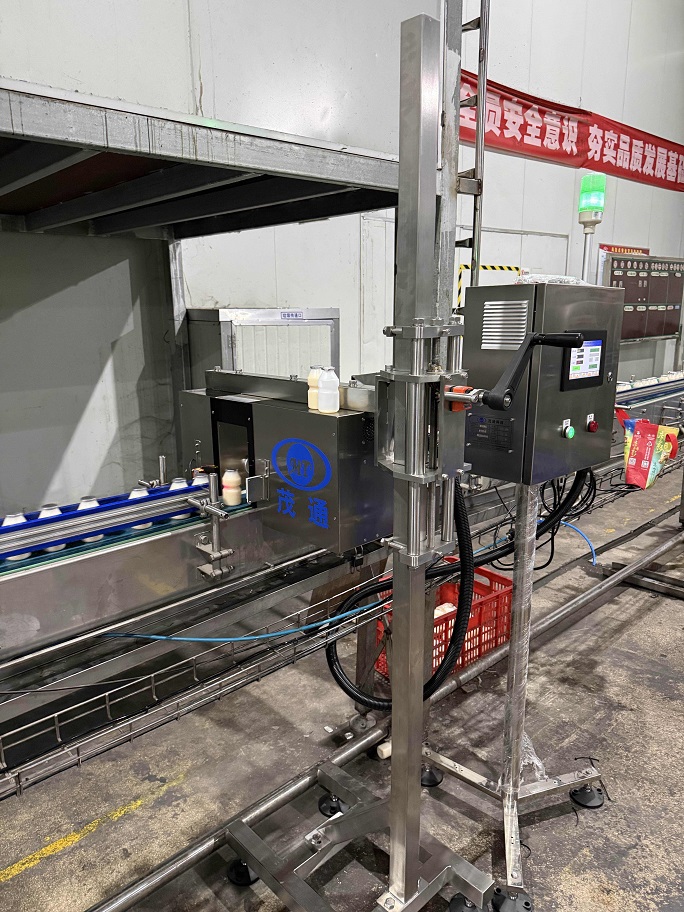
The inspection machine shall be positioned downstream of the filling machine, either upstream or downstream of the inkjet printer, depending on the actual production-line configuration.
Conveyor Requirements
The equipment shall be installed on a single-row conveyor chain. A straight conveyor section of at least 2 meters shall be available at the proposed installation location to provide sufficient space for equipment installation and stable container positioning.
Installation Schedule
On-site installation is expected to be completed within 24 hours, subject to the site being properly prepared in advance.
Conveyor Modification
An opening of no more than 150 mm shall be provided in the conveyor guide rail along the straight section to allow the rejection mechanism to discharge defective containers smoothly.
Main System Components
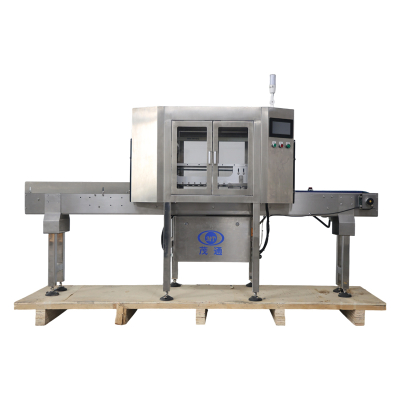
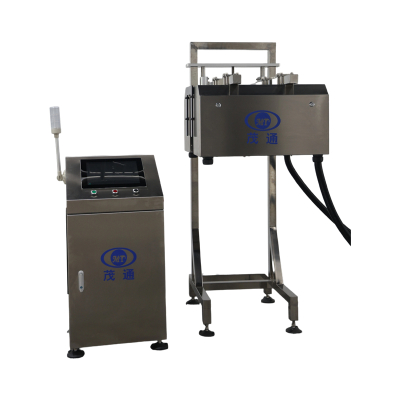
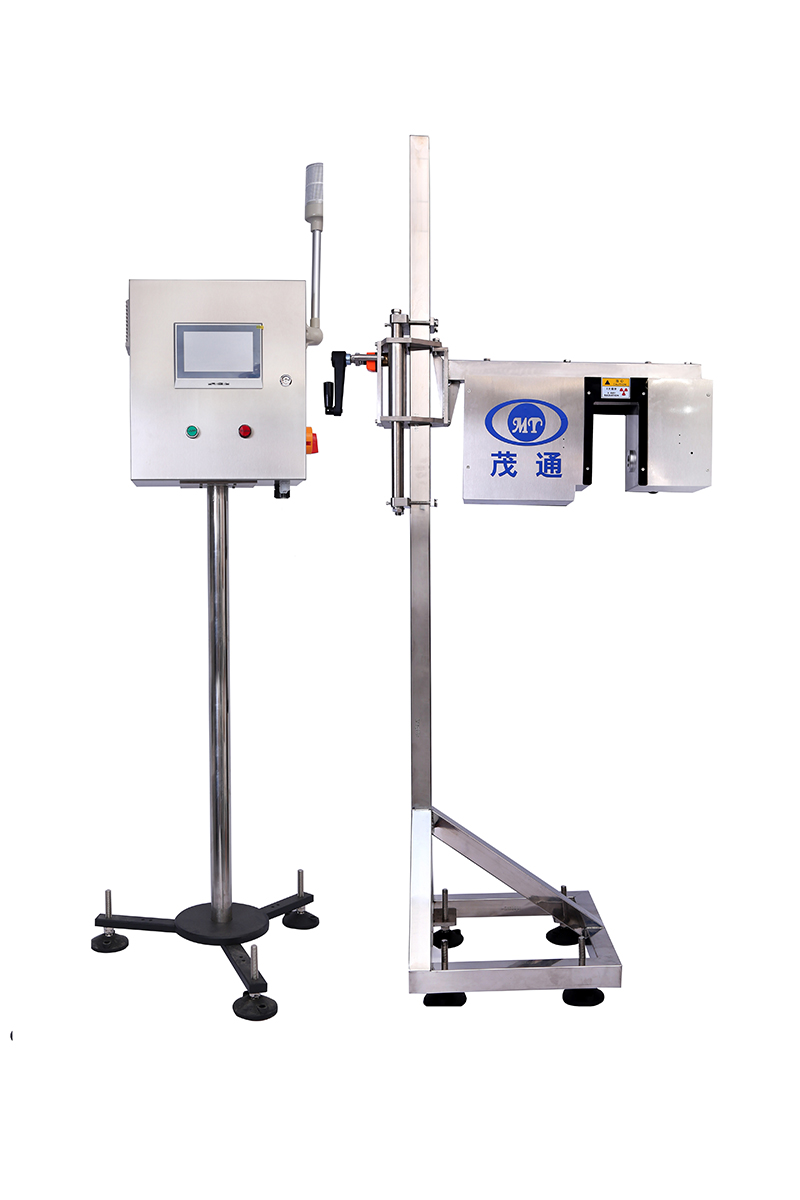
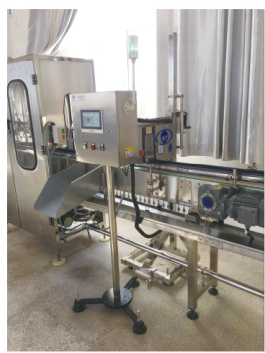
The complete inspection system mainly consists of:
Liquid level inspection unit
Automatic rejection unit
Electrical/power distribution cabinet
HMI operating interface
Electronic control modules
Mechanical assemblies and supporting components
Rejected Product Handling
The purchaser is advised to provide a rigid collection container at the rejection outlet for convenient collection and handling of non-conforming products.
2. Inspection Capabilities
The system provides the following liquid-level inspection functions:
Low liquid level detection — Standard function
High liquid level detection — Optional/Auxiliary function
The actual inspection limits can be configured according to the customer's product specifications and quality requirements.
3. Operating Principle
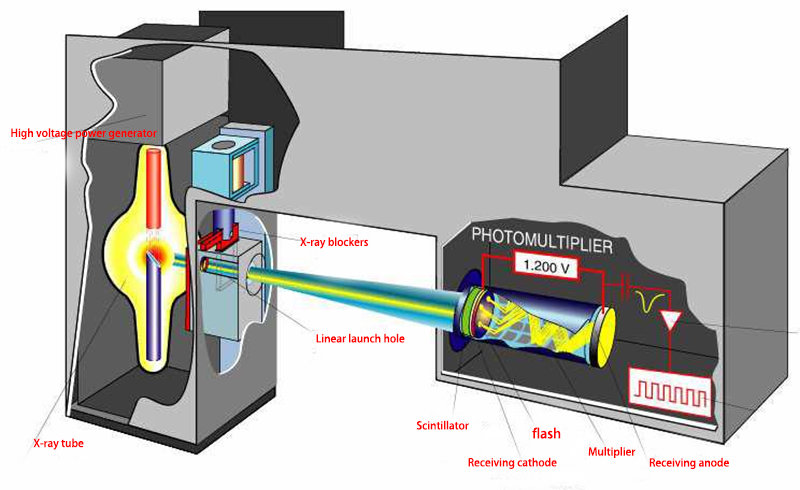
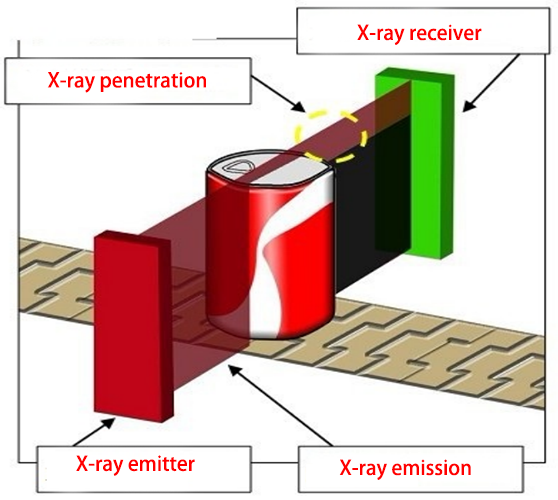
The equipment utilizes X-ray transmission technology to determine the liquid level inside the container.
As X-rays pass through containers containing different amounts of product, the transmitted radiation intensity received by the detector varies accordingly. These differences are converted into measurable signals and processed by the system.
The measured values are compared with the predefined reference parameters configured by the user. When the detected liquid level falls outside the permitted range, the system identifies the container as non-conforming and sends the corresponding signal to the automatic rejection mechanism.
The defective container is subsequently removed from the production line at the designated rejection position.
4. Main Technical Features
Non-Contact Inspection
The system performs non-contact liquid level measurement, eliminating physical contact with the container and preventing damage or contamination during inspection.
Accurate Product Tracking
Container tracking is based on an encoder coupled to the synchronous drive system, allowing the equipment to maintain accurate rejection positioning even when the production line experiences temporary stoppages or variations in conveying speed.
Adaptive High-Speed Inspection
The system can accommodate different conveyor speeds and continuously adjust its inspection timing to maintain real-time detection performance during production.
Separated Control Architecture
The inspection and control functions are arranged in independent cabinets, helping reduce electromagnetic interference and improving the overall stability and reliability of the electrical system.
Sealed Stainless-Steel Construction
The equipment enclosure is manufactured from stainless steel and adopts a sealed structural design. This provides effective resistance to moisture, condensation, mist, and water droplets, making the machine suitable for demanding production environments.
Automatic X-Ray Standby Protection
When the production line is idle, the system can automatically stop X-ray emission, reducing unnecessary radiation exposure and power consumption while improving equipment safety.
Embedded Control System
The equipment combines dedicated hardware circuitry with an embedded operating system, providing reliable long-term operation and reducing the impact of general-purpose computer system failures on production.
Audible and Visual Alarms
An integrated sound-and-light alarm system provides immediate notification of equipment abnormalities or inspection-related events.
Automatic Defect Rejection
Once a non-conforming container is identified, the system automatically generates a rejection signal and activates the reject mechanism to remove the defective product from the production flow.