Keep Craft Beer Can Leak Detection Stable
In craft beer packaging, a small sealing defect can affect freshness, carbonation retention, and customer confidence. Our Craft Beer Can Leak Detection Machine is designed to support continuous online inspection by checking sealing quality, identifying defective products, and removing them from the production line. Stable results still depend on more than the inspection unit itself. The surrounding environment, conveyor layout, power supply, compressed air, and can stability all influence how consistently the system performs.

Why Operating Conditions Matter
A Craft Beer Can Leak Detection Machine works in a demanding production environment where moisture, temperature changes, vibration, and inconsistent spacing can affect inspection stability. For breweries, the goal is not only to detect defective cans but also to reduce avoidable false rejects. Keeping the machine within its specified operating conditions helps protect image acquisition, sensor response, and rejection timing during high-speed production.
The system is intended for non-contact online inspection and 360° bottle cap inspection. It can detect sealing defects in time, helping production teams respond to sealing machine issues before defective products accumulate. This makes the Craft Beer Can Leak Detection Machine especially useful on lines where product quality and line continuity must be managed together.
A stable line environment also supports repeatable threshold performance. When cans move through the inspection area with consistent spacing and minimal disturbance, the machine can evaluate each product more accurately. That reduces unnecessary interventions and helps the inspection result reflect actual sealing quality rather than unstable line conditions.
Environmental Requirements for Stable Inspection
The recommended altitude range is 5–3000 m above sea level. Staying within this range supports stable operation under normal atmospheric conditions. For plants at higher elevations, commissioning should pay close attention to inspection thresholds and actual line performance.
The required operating temperature is 5°C–40°C. Temperature control is important because inspection equipment includes cameras, lighting, sensors, control electronics, and processing components. Sudden temperature changes may affect detection consistency, so the Craft Beer Can Leak Detection Machine should be installed in a controlled production area rather than exposed to extreme heat, cold, or rapid transitions.
Relative humidity should be maintained at 50%–65% RH. This range helps reduce problems associated with moisture and unstable optical conditions. Since brewery environments may include cooling, rinsing, or condensation-prone areas, the inspection point should be kept free from water droplets that could interfere with camera-based inspection.
Factory site conditions are equally important. The production area must meet national standards for floor flatness and load-bearing capacity. A level and stable floor helps prevent mechanical vibration from transferring into the inspection zone. If the conveyor or inspection frame moves during operation, image capture and rejection signals may become less stable.
After delivery, the equipment and spare parts should be stored in compliance with national standards. Proper lubrication and maintenance should be performed during storage to prevent corrosion, surface damage, or deformation that could affect installation, commissioning, or future operation.
How the Inspection Process Works
The Craft Beer Can Leak Detection Machine uses a high-resolution camera with a 360-degree sidewall lens combination to photograph the sealing inspection area. The system first locates the cap accurately, then establishes a circular detection area along the sidewall edge in the image. If the cap is poorly sealed, the grayscale value in that detection area changes noticeably. Once the value exceeds the configured threshold, the product is identified as defective and rejected.

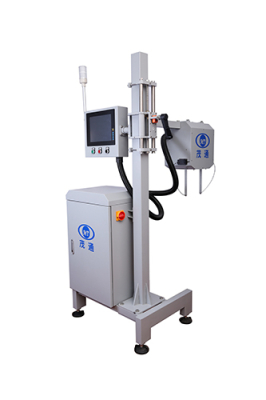
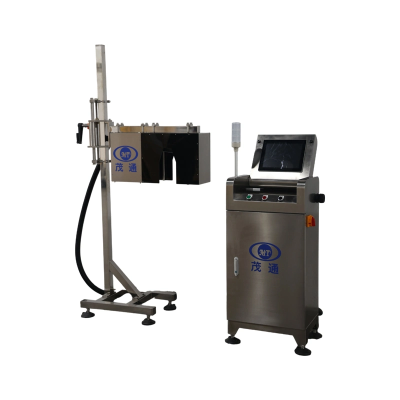
This non-contact process avoids physical interference with the can while supporting continuous online monitoring. The system includes a distribution cabinet, detection module, and rejection device. Its electrical composition includes an image processing industrial computer, camera, lens, DSP, touch screen, light source controller, light source, and related camera I/O components. Together, these parts support image capture, processing, operator interaction, and defective product removal.
Installation Requirements Breweries Should Confirm
Before installing a Craft Beer Can Leak Detection Machine, the production line should provide a single-row chain conveyor with a straight section of at least 1.8 meters. The conveyor should leave a clear passage around the bottle necks or can neck area and should operate without obvious vibration or water droplets at the inspection point.
The inspection conveyor inclination should be no more than 20°, and the cans should maintain 3–5 mm spacing. Proper spacing supports stable triggering and prevents overlapping products from disrupting image capture. If the neck area shows noticeable vibration, a 60–80 mm clamping device should be installed to stabilize the product during inspection.
The production conditions include 220V, 50Hz single-phase power, total power consumption of approximately 0.5 kW, and 24 VDC control voltage. The rejection function requires compressed air in the range of 4–12 bar, with the customer providing the air connection from the source to the unit. Special voltage requirements should be specified in advance because they may affect system design, delivery, and pricing.
Practical Ways to Reduce False Rejects
For stable operation, breweries should keep the inspection area dry, maintain consistent can spacing, and avoid installing the Craft Beer Can Leak Detection Machine near high-vibration equipment. Caps should also be handled consistently because mixed or inconsistent sealing conditions can make threshold setting more difficult.
Operators should monitor the touchscreen HMI during production and adjust inspection parameters only through controlled procedures. The machine’s modular architecture and available interfaces support future system expansion, while its robust design is intended to simplify maintenance and reduce operating interruptions.
A well-installed Craft Beer Can Leak Detection Machine helps breweries improve sealing quality control without slowing the line unnecessarily. When environmental control, conveyor stability, compressed air, and rejection timing are properly aligned, the inspection system can deliver more reliable results and help prevent defective cans from reaching storage, distribution, or consumers.
FAQs
What environment is recommended for a Craft Beer Can Leak Detection Machine?
The recommended conditions are 5–3000 m altitude, 5°C–40°C operating temperature, and 50%–65% relative humidity, with a flat, load-bearing production floor.
Why should the inspection point be dry?
Water droplets may interfere with camera-based inspection and affect image clarity, especially around the cap or sidewall detection area.
What conveyor setup is required?
A single-row chain conveyor with at least 1.8 m of straight section is required. The inclination should not exceed 20°, and can spacing should remain between 3–5 mm.
When is a clamping device needed?
If the can or neck area vibrates noticeably at the inspection point, a 60–80 mm clamping device should be installed to improve stability.
What utilities are required for installation?
The system uses 220V, 50Hz single-phase power, 24 VDC control voltage, approximately 0.5 kW total power, and compressed air at 4–12 bar for rejection.