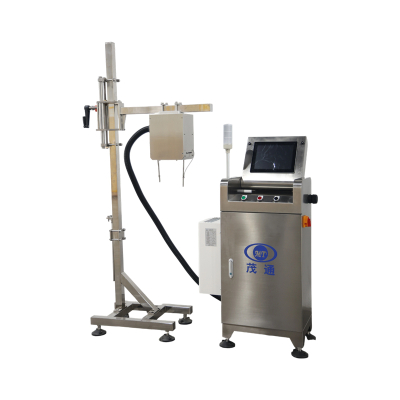
Make Craft Beer Can Leak Detection Work Inline
For craft breweries scaling up canning, sealing quality is no longer just a final-stage concern. A weak seam can compromise carbonation, freshness, and appearance long before the can reaches the shelf. The Craft Beer Can Leak Detection Machine brings non-contact, 360° inline sealing inspection directly onto the conveyor, so every 1L–2L can can be checked at speed before downstream packaging.
Project Overview
The project title is Sealing Inspection System, and its core role is straightforward: inspect sealing quality, identify defective cans, and trigger automatic rejection without interrupting normal conveying. For breweries, this makes the Craft Beer Can Leak Detection Machine a practical checkpoint between sealing and downstream packaging.
Key specifications include:
•Function: sealing quality checks, defective product detection, and automatic removal
•Maximum capacity: up to 18,000 cans per minute
•Applicable container size: 1L–2L
•Inspection mode: non-contact online inspection
•Inspection coverage: 360° online bottle cap inspection
Because sealing faults can reflect problems in the sealing machine itself, inline inspection also helps production teams respond earlier and avoid the continuous output of defective products.
How the 360° Non Contact Inspection Works
The Craft Beer Can Leak Detection Machine uses a high-resolution camera together with a 360-degree sidewall lens to photograph the sealing inspection area. The system first locates the bottle cap accurately, then establishes a circular detection area at the edge of the sidewall in the image. By using a full-view image capture process, the equipment can inspect the critical seam area while the can remains in motion on the line. This makes it suitable for inline production environments where stable throughput matters as much as inspection sensitivity.

If the cap is poorly sealed, the circular detection area shows a noticeable grayscale value change. The system compares that change against a configured threshold. When the grayscale value exceeds the threshold, the product is judged defective and rejected from the line.
This method is valuable because it does not touch the product. Non-contact inspection reduces mechanical interference with the can while allowing continuous online monitoring during production. The detection threshold can also be adjusted according to actual operating needs, helping the system match the inspection conditions of different lines.
System Composition
The system uses a modular structure that combines image processing, detection, and rejection control.
| Module | Main Composition | Function |
|---|---|---|
| Distribution cabinet | Image processing computer, interface processing computer, strobe controller, control system, LED light source, industrial camera, and sensors | Supplies power, processes images, and controls defective product rejection |
| Detection module | Solenoid valves and mechanical components | Dynamically captures inspection images during production |
| Rejection device | Signal receiving and rejection control components | Removes defective products from the conveyor |
The electrical composition includes an Intel 5 image processing industrial computer, a customizable full-view camera, a customizable all-around lens, an MT-9000 DSP, a touch screen, a light source controller, and a light source.
The Craft Beer Can Leak Detection Machine also features a touchscreen HMI with color display, helping operators monitor and operate the system efficiently during routine production and adjustment.
Installation Conditions That Affect Accuracy
Camera-based sealing inspection depends strongly on the surrounding line conditions. The production line should use a single-row chain conveyor with a straight section of at least 1.8 meters. The conveyor must provide a clear passage around bottle necks and should be free from vibration and water droplets, because these factors can interfere with image capture.
The inspection conveyor should have an inclination of no more than 20°, and products should maintain 3–5 mm spacing. If bottle necks show obvious vibration at the inspection point, a 60–80 mm clamping device should be installed to stabilize the products and improve detection reliability.
Production conditions include:
Factory floor flatness and load-bearing capacity should meet national standards to support stable operation. After delivery, equipment and spare parts should be stored properly, with lubrication and maintenance performed to prevent corrosion, surface damage, or deformation that may affect installation or commissioning.
Value for Craft Beer Canning Lines
For canning lines handling larger craft beer containers, an inline sealing inspection system provides a clear operational benefit: each can is checked during conveying, and defective products are removed automatically. The Craft Beer Can Leak Detection Machine supports continuous online inspection, helping production teams maintain sealing consistency and reduce the risk of defective cans moving into later packaging stages.
Its modular architecture also leaves interfaces for future system expansion. In addition to sealing inspection, the system highlights include dual-side inspection for verifying inkjet codes and QR codes, supporting a broader quality control layout where production lines require multiple visual checks.
FAQs
What is the main function of the Craft Beer Can Leak Detection Machine?
It conducts sealing quality checks, detects defective products, and automatically removes unqualified cans from the production line.
What container sizes does the system support?
The system is specified for 1L–2L containers.
Does the inspection touch the can?
No. It uses non-contact online inspection, so the product is not damaged during the inspection process.
How are sealing defects identified?
A high-resolution camera and 360-degree sidewall lens capture the inspection area. The system analyzes grayscale changes within a circular detection area and rejects products that exceed the set threshold.
What line conditions are important for stable inspection?
A single-row chain conveyor, a straight section of at least 1.8 meters, 3–5 mm spacing, low vibration, and a dry inspection area are important for reliable image capture.
Can the system reject defective cans automatically?
Yes. The rejection device receives system signals and controls the automatic removal of defective products.