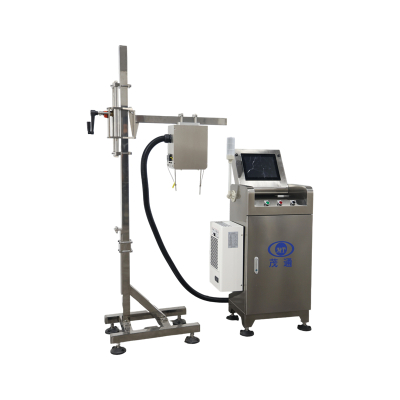
Beer Level Detection Machine Stabilizes High Speed Can Lines
Consistent filling is one of the most visible quality signals in beverage packaging. On fast canning lines, a Beer Level Detection Machine helps check each container online, identify abnormal fill levels, and remove nonconforming cans without contact. For beer producers, this means fill control can be integrated into the production flow rather than handled only through manual sampling after the fact.

Why Inline Fill Level Control Matters
A beer level detection machine is designed for online inspection after the filling process, where cans continue moving through the line. Instead of stopping production to check samples, the system evaluates containers during normal operation. This approach is especially useful where underfilled cans may create customer complaints and overfilled cans may increase product loss.
The equipment supports standard low liquid level detection and auxiliary high liquid level detection. In practical terms, the beer level detection machine checks whether the liquid level falls within the user-set standard range and then triggers rejection when a container is judged unqualified.
How X-ray Detection Works
The beer level detection machine uses the penetration principle of X-ray inspection. Containers with different liquid levels form different projections at the receiving end. These projections are converted into numerical signals and compared with parameters set by the user.
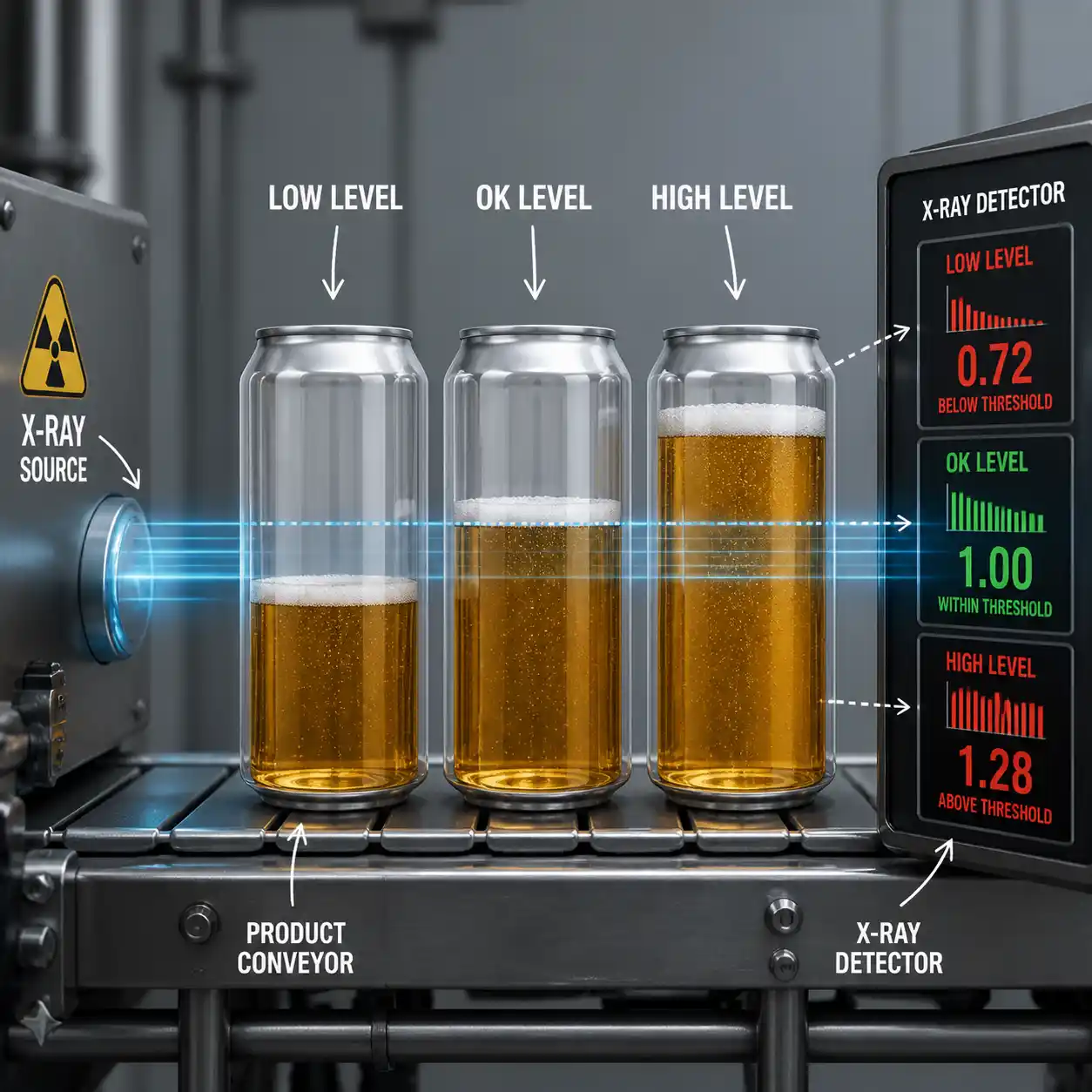
When the signal indicates a nonconforming fill level, the detection system automatically rejects the defective product. Because the method is non-contact, online inspection, it does not damage the cans. The beer level detection machine can also adapt automatically to different production line speeds, allowing dynamic inspection during normal line operation.
Installation Conditions Buyers Should Confirm
Correct installation is central to stable performance. The beer level detection machine is positioned downstream of the filling machine and can be installed either before or after the inkjet printer. The production line should include a single-row conveyor chain with a straight section of at least 2 meters.
A guardrail gap of no more than 15 cm should be opened in the straight conveyor section to allow the rejector outlet to discharge defective containers. Installation is planned to be completed within 24 hours. For reliable rejected-container handling, a rigid collection box should be placed at the discharge point.
Before commissioning a beer level detection machine, buyers should also check the basic site and utility conditions, including the required power supply, control voltage, compressed air connection, factory floor flatness, load-bearing conditions, and storage requirements for delivered equipment and components.
Main System Components
A complete beer level detection machine includes coordinated mechanical and electrical modules. Each part contributes to inspection, signal processing, rejection, or operation control.
| Module | Role in the system |
|---|---|
| Inspection unit | Performs liquid level inspection and signal acquisition |
| Rejection unit | Removes containers judged to be unqualified |
| Power distribution cabinet | Supplies and manages electrical power |
| HMI | Allows operators to monitor and adjust parameters |
| Electronic assemblies | Support control, communication, and processing functions |
| Mechanical parts | Support installation and integration with the conveyor line |
This structure helps the beer level detection machine operate as part of the canning line rather than as a separate offline check. Separate inspection and control cabinets also help prevent electromagnetic interference between electronic components, supporting more stable performance.
Performance Points for High Speed Lines
For high-speed beverage plants, the value of a beer level detection machine depends on both detection and rejection accuracy. The equipment is designed for dynamic inspection and uses encoder-based counting. Once a defective can number is recorded, rejection accuracy is not affected by line stops or speed changes.
Key documented parameters include a maximum speed of up to 72,000 bottles or cans per hour, conveyor belt speed compatibility of up to 1.6 m/s, dynamic container resolution of ±1.5 mm, and static container resolution of ±1 mm. The rejection rate for unqualified containers can reach ≥99.99% at a detection speed of 400 containers per minute.
Practical Integration Checklist
Before selecting or installing a beer level detection machine, production teams can use the following checklist:
When these conditions are prepared in advance, the beer level detection machine can be integrated more smoothly and deliver more reliable online fill level inspection.
FAQs
Where should a beer level detection machine be installed?
It should be installed downstream of the filling machine and can be positioned either before or after the inkjet printer.
What conveyor layout is required?
The production line should include a single-row conveyor chain with a straight section of at least 2 meters.
Does the system detect both low and high liquid levels?
Yes. Low liquid level detection is the standard function, while high liquid level detection is an auxiliary function.
How are defective cans rejected?
The system records defective container information through encoder-based counting and activates the rejection unit at the correct position.
Does X-ray inspection damage the cans?
No. The system performs non-contact, online inspection and is designed not to damage the cans.