Trust Liquid Level Capping Detection Before Bottles Ship
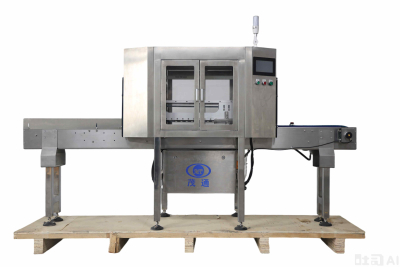
Liquid Level Capping Detection Machine is designed for PET bottle production lines that need to inspect several quality points at one inline station. The system checks cap status, anti-theft ring integrity, liquid level, and inkjet printing, then automatically rejects bottles that do not meet the set inspection criteria. For PET bottles from 200 ml to 2 L, the published maximum output is up to 60,000 bottles per hour, making this equipment suitable for high-speed beverage and filling operations that depend on consistent online quality control.

Why One Inspection Station Matters
In PET bottle packaging, defects often appear in more than one place. A cap may be missing, too high, or crooked. The anti-theft ring may be broken or missing. The liquid level may be below or above the standard reference. Inkjet printing may be absent, incomplete, excessive, or blurred.
The Liquid Level Capping Detection Machine brings these checks together in one project for PET bottle capping, anti-theft ring, liquid level, and inkjet printing inspection. This combined approach helps production teams reduce manual checking, keep the line moving, and identify nonconforming bottles before they move further downstream.
Inspection Scope and Accuracy
The machine is configured to inspect the following key items:
| Inspection item | Detection standard | Published result |
|---|---|---|
| No cap | — | Rejection rate ≥99.99% |
| High cap | >0.8 mm | ≥99.98% |
| Crooked cap | >0.8 mm | ≥99.5% |
| Safety ring 100% disconnected | >1 mm gap | ≥99.99% |
| Liquid level high or low | ±3 mm from standard | ≥99.92% |
| No inkjet print | — | ≥99.99% |
| Overall inkjet 20% missing | — | ≥99.8% |
| Blurred inkjet removing characters | — | ≥99.99% |
These performance figures make the Liquid Level Capping Detection Machine a strong option for lines where cap quality, tamper-evident ring condition, fill consistency, and code readability must be monitored continuously.
How the Detection Process Works
The inspection sequence is direct and repeatable. As each PET bottle passes the positioning sensor, the control unit records the bottle ID and encoder signal. The sensor then triggers the camera to capture images of the cap, liquid level, and inkjet printing area. The image processor analyzes the captured image and sends results to the human-machine interface and PLC. If the bottle is judged unacceptable, the PLC signals the rejector to remove it from the line.

This structure allows the Liquid Level Capping Detection Machine to connect image capture, judgment, operator display, and rejection control in a single automated process, reducing manual intervention and keeping inspection logic consistent across shifts.
Main Mechanical and Electrical Composition
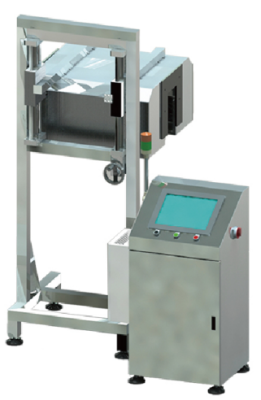
The equipment is organized into three main mechanical groups:
Key electrical components include an embedded imaging industrial computer with four Ethernet ports, four DAHUA high-speed gigabit digital cameras, four COMPUTAR 6 MP 12 mm lenses, a Maotong independently developed PLC, a 15-inch Taiwan IEI touchscreen display, a customized light source controller, photo light sources, an encoder, Schneider low-voltage electrical components, a Maotong image processing system, and a Schneider tri-color tower light.
The power distribution cabinet uses 304 material, and the single-stage air-push rejector is also listed with 304 material. These structural details matter for buyers evaluating equipment durability, control reliability, and integration readiness on stainless-steel conveyor systems.
Production and Installation Conditions
Before installing a Liquid Level Capping Detection Machine, the production site should match the stated operating conditions:
The required production utilities are clearly defined:
| Item | Requirement |
|---|---|
| Power supply | 220V, 50Hz, single-phase, customer-provided |
| Special voltage | Must be communicated in advance; specifications, delivery time, and price may vary |
| Total power | Approximately 2.4 kW |
| Control voltage | 24VDC |
| Compressed air | Minimum 4 Pa, maximum 12 Pa; customer connects the air line to the equipment main unit |
These conditions help ensure the machine runs stably and that its inspection accuracy is not affected by temperature, humidity, or inconsistent utilities.
Matching the Machine to a PET Bottle Line
For procurement teams, the key question is whether the machine fits the container range, line speed, and inspection priorities. This model is specified for PET bottles from 200 ml to 2 L and a maximum output of up to 60,000 bottles per hour. It is suitable when a line needs cap inspection, anti-theft ring inspection, liquid level detection, and inkjet printing inspection in one automated station.
The 15-inch touchscreen displays inspection results and status information, helping operators observe rejection data and quickly identify upstream process issues related to capping, filling, or inkjet printing.
FAQs
What does the Liquid Level Capping Detection Machine inspect?
It inspects PET bottles for cap defects, anti-theft ring problems, high or low liquid level, and inkjet printing defects.
What bottle sizes are supported?
The stated bottle range is 200 ml to 2 L PET bottles.
What is the maximum output?
The published maximum output is up to 60,000 bottles per hour.
What power supply is required?
The machine requires 220V, 50Hz, single-phase power, provided by the customer. Special voltages should be communicated in advance.
What is the control voltage?
The control voltage is 24VDC.
What compressed air condition is listed?
The listed compressed air requirement is minimum 4 Pa and maximum 12 Pa, with the customer providing the air line connection to the equipment main unit.